
Summary
Generative AI is important because it helps teams deal with the everyday problems that slow down launches. It can make work clearer, faster, and easier to manage when used for planning, development, testing, and collaboration. Use it carefully where there is the most friction for the best results, not in every part of the workflow.
One big mistake doesn't usually cause a product to be late to market. The delay is more often caused by small slowdowns that happen during planning, handoffs, coding, testing, approvals, and release cycles. If you miss one detail in the requirements, you'll have to do the work again. A slow QA cycle makes deployment take longer. A messy backlog makes it difficult to see what needs to be done for the next sprint.
That's why generative AI is now a part of everyday product work. It's not just about making code snippets or writing content. Teams are using it to organize messy inputs, speed up tasks that need to be done over and over again, find useful patterns faster, and keep delivery on track when the workload gets too big for too many tools and people.
The real value is useful. Generative AI helps product teams make decisions faster, cuts down on unnecessary back-and-forth, and gets ideas to release with fewer delays in the middle.
What Slows Delivery
Development isn't the only thing that causes most product delays. They show up a lot earlier and keep getting bigger as the work goes on.
When teams don't have all the information they need, planning can take a long time. Requirements could be in meetings, documents, feedback threads, and chat messages. When developers have to explain things that should have been clear earlier, they lose time. At the end QA gets pushed, which means testing is rushed and fixes are made at the last minute. Deployment becomes stressful when unstable builds or manual checks keep getting in the way of the release flow.
This is all normal. This is how many teams slow down their deliveries. Sometimes the problem isn't a lack of skill or effort. The amount of friction between each stage is often what matters.
Where Generative AI Helps
Generative AI is helpful because making new products generates a lot of unstructured data. Teams are always dealing with meeting notes, user comments, support tickets, bug reports, code changes, documentation, release notes, and updates from within the company.
AI can take those random pieces of information and make them useful. It can summarize, sort, write, suggest, compare, and show patterns. That matters because how quickly teams can turn information into action affects how quickly products arrive to customers.
AI doesn't replace product managers, designers, engineers, or testers when it's used correctly. It takes some of the weight off of their work so they can spend more time on tasks that require a lot of thought.
Planning and Discovery
When teams are still trying to figure out what's most important, early product work can take longer than expected. Feedback from users can come from various sources, such as support platforms, call notes, surveys, and chat tools. It takes time to pull useful signals from all of that by hand.
Generative AI can help groups organize feedback into groups, summarize complaints that keep coming up and bring attention to feature requests that keep coming up. For instance, support teams already utilize AI to summarize ticket conversations, enabling agents to catch up more quickly. This method also makes it easier for product teams to look at common problems without having to read every thread. Zendesk's support guides show how to do this ticket summarization workflow.
It's not glamorous to summarize like that, but it is useful. It helps teams plan with more confidence by giving them a faster way to find out what problems customers are having.
Requirements and Documentation
It sounds easy to gather requirements, but it gets harder when real projects start. Inputs come in pieces. One part is in a kickoff document, another is in Slack, and many important assumptions are hidden in meeting talks that no one wrote down properly.
Generative AI makes it easier to write by turning rough ideas into structured first drafts. Product teams can use it to turn notes into user stories, write up the main points of workshop discussions, write functional requirements, or make outlines for technical documentation. That doesn't mean the first draft is ready to be published. It means that the blank page problem is less of a problem, and teams can respond to something real instead of having to start from scratch every time.
This also helps with a common delivery problem: finding out about unclear requirements too late. Teams usually avoid some of the rework that would have happened later if they can clear up confusion sooner.
Design and Architecture
When people talk about architecture and design, the conversation tends to get longer because there are many good options and no one wants to choose the wrong one too soon. That makes sense, but it can also make things take longer.
AI can help with this step by making trade-offs, comparing different options, and helping teams write down why they made a choice. It can help with rough user flows, content structures, and early drafts of the interface that stakeholders can see and respond to in design.
That doesn't take the place of real design thinking or engineering judgment. It makes it easier to go from a vague idea to a draft that people can look at. That alone saves days of going around in circles for many teams.
Development Work
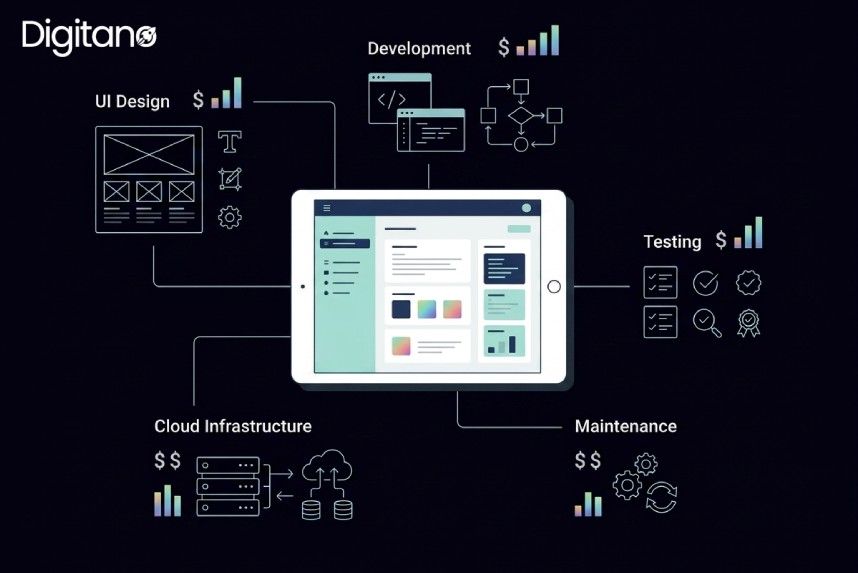
AI is most visible in development. GitHub Copilot and other tools can help with code review by suggesting code, turning natural language prompts into snippets, and more. That helps because a lot of development time is spent on boilerplate, repeating patterns, small changes, and routine edits, not just hard engineering.
AI takes care of some of that boring work, which frees up developers to focus on logic, edge cases, and decisions that are specific to the product. It doesn't usually build the whole product but it does help teams keep going.
Testing and QA
One of the easiest times for timelines to slip is during testing. Features go through development but then they slow down in QA when there isn't enough coverage or when manual checks take too long.
AI-powered testing tools help by making it easier to find failures faster, speeding up the process of making tests and lowering the amount of work needed to keep them up to date. AI can also make test cases from requirements or recent code changes. This helps teams get QA involved earlier instead of waiting until the end.
Collaboration and Visibility
Poor visibility causes a lot of delivery problems. Updates are scattered across project boards, chats, support tools, and documents, which means that teams waste time figuring out what has changed and what needs their attention.
Generative AI can help by giving clearer updates on progress, summarizing conversations, and finding things that are getting in the way. This might not seem as exciting as code generation, but it helps teams spend less time looking for context and more time getting work done.
Release and Time to Market
Generative AI is useful for more than just speeding up work. It is that fewer stages get stuck waiting for people to do things like organize information, write documents, or make sense of scattered inputs. That has a bigger effect on how long it takes to get to market.
Planning is easier, development wastes less time on repeating tasks, testing starts sooner and releases seem less chaotic. It doesn't promise instant speed, but it can make delivery more reliable.
What Teams Should Watch Out For
Generative AI is helpful, but it doesn't always work. Uncertain prompts lead to ambiguous output, and it's crucial to handle sensitive information carefully. There is also a chance that you will believe polished answers that are still wrong or missing information.
That's why it's still important for people to review things, especially requirements, architecture, testing logic, and work that involves dealing with customers. AI works best when it is seen as a tool to help a strong process, not as a replacement for one.
Frequently Asked Questions
Q1. Is this the kind of thing that can replace product managers, developers, or QA teams?
A. No, and most teams are not using it that way anyway.
Q2. What part of the lifecycle usually improves first?
A. In a lot of cases, the first wins show up in documentation, coding support, and testing.
Q3. Can a company just add generative AI and expect faster launches?
A. Not really. If the workflow is messy to begin with, AI usually just moves that mess around faster.
Q4. Is generative AI more useful for startups or bigger product teams?
A. Honestly, both can get something out of it, but the use case may look different.
Q5. What is the biggest mistake teams make when using it?
A. Probably expecting too much from it too soon.