
A practical, step-by-step guide from idea to launch, with real costs, timelines, and the honest truths most people don't tell you.
You've got an idea for an app. Maybe it came to you in the shower. Maybe you've been frustrated with an existing product for years and thought 'I could build something better.' Maybe you spotted a gap in a market that nobody is serving well. Whatever sparked it, the question now is: how do you actually turn that idea into something real?
That's exactly what this guide is for. Not the theoretical stuff, but the actual process what to do first, what mistakes to avoid, how much it's going to cost, and what makes the difference between an app people love and one they download once and forget about.
Let's start with why this matters so much right now.
The Opportunity Is Bigger Than Ever
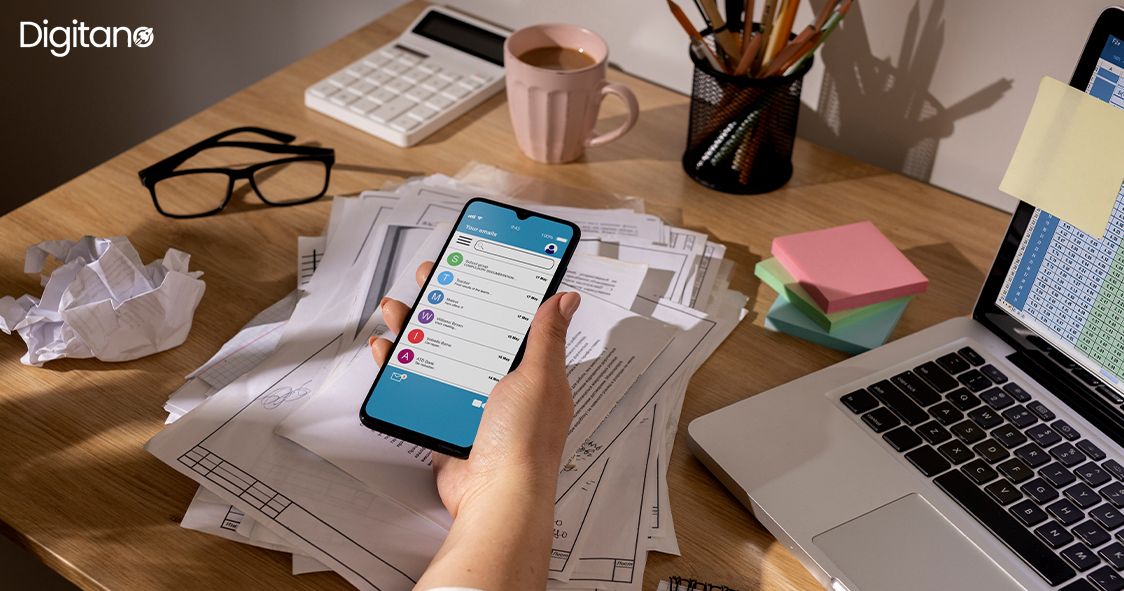
There are now roughly 4.69 billion smartphone users worldwide, and that number keeps climbing. Global app downloads hit 137.8 billion in 2024 alone. People aren't just using apps for entertainment, they're using them to shop, manage money, book appointments, track health, run businesses, and stay in touch with everyone they know.
For business owners, that creates an enormous opportunity. Apps aren't just for tech giants anymore. Independent businesses, startups, professional services, and even sole traders are building apps that genuinely serve their customers and generate real revenue.
Consumer spending on mobile apps reached $155 billion in 2024, growing 15% year-over-year. And by the end of 2026, users are expected to spend 5.5 trillion hours in mobile apps globally. That's not a niche trend that's where your customers are spending their time.
Sources: CMARIX / Alea IT Solutions, 2025–2026
Step 1: Validate the Idea Before You Build Anything
This is the step most people skip and it's the most important one. The graveyard of failed apps is full of products that were technically well-built but solved a problem nobody actually had, or tried to solve a problem that already had better solutions.
Validation doesn't mean asking your friends if they think it's a good idea. It means talking to the actual people who would use your app, understanding how they currently solve the problem, and figuring out whether they'd pay for or regularly use a better solution.
How to Validate Your App Idea
- Identify your target user precisely. Not 'people who like fitness' but 'working parents aged 30–45 who want to exercise at home in under 30 minutes'.
- Interview at least 10–15 potential users. Ask about their current behaviour, not whether they'd use your app. People say yes to hypothetical questions but don't download apps.
- Look at competitor apps: Read their 1-star and 2-star reviews. That's where your real opportunity lives. What are people frustrated about?
- Check search volume: Use Google Trends or keyword tools to see how many people are searching for solutions to the problem you're solving.
- Build a landing page: Describe the app, offer a waitlist, and see how many people sign up. Real interest shows up as real email addresses.
The goal at this stage isn't to have all the answers. It's to make sure you're building something for real people with a real problem, not just something you personally think is cool.
Step 2: Define Your MVP Start Small on Purpose
Once you've validated the core idea, the next mistake to avoid is trying to build everything at once. The term MVP Minimum Viable Product gets thrown around a lot, but here's what it actually means in practice: the smallest version of your app that solves the core problem well enough to be genuinely useful.
Not a stripped-down, broken version. Not a demo. A real, working product that does one thing really well. Everything else comes later.
Why MVP Matters
Building a full-featured app from day one is expensive, takes a long time, and is risky because you haven't yet learned what your actual users want. An MVP lets you launch faster, gather real feedback, and iterate based on what people actually do (not what they say they'll do).
Simple MVP apps can be built in 2–4 months for $5,000–$50,000. That's a very different investment to a full complex app that might take 9–18 months and cost $300,000. Starting with an MVP is almost always the smarter financial decision.
For your MVP, ask this question: 'What is the one core thing this app needs to do that would make someone's life genuinely better?' Focus everything on that. Cut everything else.
Step 3: Choose Your Platform iOS, Android, or Both?
One of the earliest technical decisions you'll need to make is which platform to build for. This affects your budget, timeline, and who you can reach.
The Main Options
- iOS only (Apple): Apple's App Store commands 63% of global consumer app spending and generally attracts higher-spending users. A sensible starting point if your target audience skews toward the US, UK, or Australian markets.
- Android only (Google Play): Google Play sees much higher download volumes globally, particularly in Asia, Latin America, and emerging markets. Better reach, but monetisation can be lower per user.
- Both natively: Building separate apps for iOS and Android with native code (Swift/Kotlin) gives you the best performance and user experience, but doubles development effort and cost.
- Cross-platform (React Native or Flutter): These frameworks let you write code once and deploy on both platforms. They've matured significantly and are now the practical choice for most startups and small businesses. Development time is 30–40% faster, and costs are significantly lower.
For most new apps on a realistic budget, cross-platform development using React Native or Flutter is the right move. You get broad reach at a manageable cost. You can always invest in platform-specific optimization later if the app takes off.
Source: Precedence Research / App Store data, 2025
Step 4: Design the User Experience Before Writing Code

This is the step that separates apps people use daily from apps people try once and delete. The design, not just how it looks, but how it works is critical. And it needs to happen before a single line of code gets written.
Wireframes and Prototypes
A wireframe is a basic sketch of each screen and how they connect. It doesn't need to look beautiful, it just needs to map out the user journey clearly. A prototype is a clickable version of those wireframes that lets you simulate how the app will actually feel.
The purpose of this stage is to work out the logic of the user experience cheaply, before development makes changes expensive. Moving a button in a wireframe takes five minutes. Moving it in finished code can take hours.
- Sketch every screen your users will see, and every path they can take through the app.
- Map the onboarding flow with particular care you have about 30 seconds to show a new user the value of your app before they leave.
- Test your prototype with real people. Watch where they get confused. Those moments are gold.
- Keep it simple. Every screen should have one clear purpose and one primary action.
Design typically accounts for 20–25% of the total app development budget and it's genuinely worth every bit of that investment. Poor UX is one of the main reasons apps get deleted.
Step 5: Build It Choosing the Right Development Approach
Now the real work begins. You have several options for how to actually get your app built, and the right choice depends on your budget, technical knowledge, and timeline.
Your Development Options
- Hire a development agency The most expensive but most comprehensive option. Agencies typically include project management, design, development, and QA. Budget $50,000 minimum for a serious agency. Good for complex apps where quality is non-negotiable.
- Hire freelancers: More affordable, but requires you to manage the process yourself. You'll need a developer (or separate iOS and Android developers), a designer, and possibly a backend developer. Platforms like Toptal, Upwork, or Clutch are starting points.
- Build it yourself (no-code / low-code) Platforms like Bubble, Adalo, Glide, and FlutterFlow let you build functional apps without writing code. Low-code platforms are growing at a 65% annual rate and can cut costs by 40–60%. Perfect for simple apps and MVPs.
- Hire a CTO or technical co-founder If you're building a serious tech product, a technical co-founder who takes equity instead of full salary can let you build something meaningful without a six-figure upfront cost. The hardest option to execute, but often the highest-quality outcome.
Here's a rough breakdown of what to expect by app type and complexity:
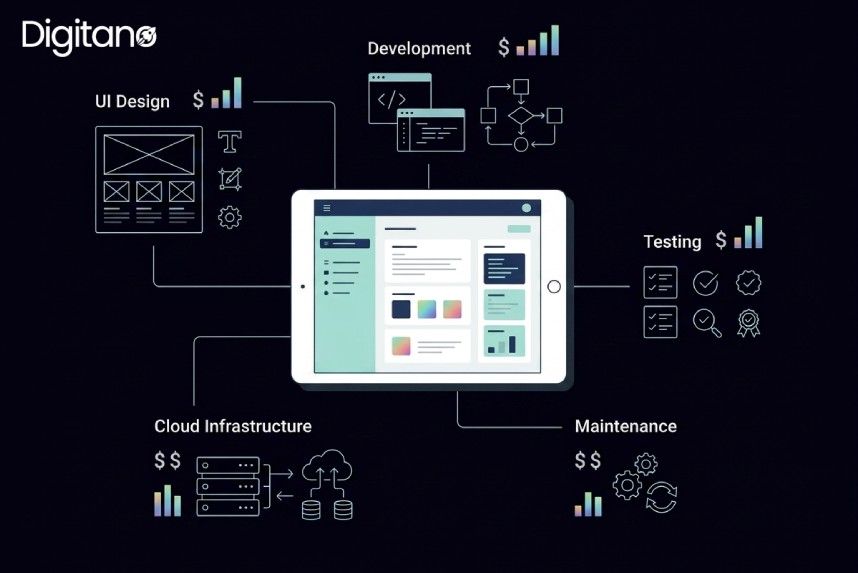
One thing to budget for that people often overlook: maintenance. Once an app is live, it needs ongoing updates for new operating system versions, security patches, bug fixes, and new features. Budget 15–20% of your initial development cost per year for ongoing maintenance.
Step 6: Test Thoroughly Before You Launch
Testing is the unglamorous part of app development that most first-timers underestimate and then regret when their app launches with obvious bugs. A rough, buggy experience on day one is extremely hard to recover from. Users who have a bad first experience rarely come back.
Testing should account for 15–20% of your total development budget, and it deserves that investment.
What to Test
- Functional testing Does every feature work as intended? Does every button do what it says?
- Performance testing: How does the app behave under load? What happens when 100 people use it at once?
- Device and OS testing: Your app needs to work on multiple screen sizes and OS versions. Android fragmentation in particular means testing on a range of devices.
- User acceptance testing (UAT): Get real users from your target audience to use the app and watch what they do. Where do they get stuck? What do they misunderstand?
- Security testing: Especially important if your app handles personal data, payments, or sensitive information.
Beta testing, releasing to a small group before full launch is one of the most valuable things you can do. TestFlight (iOS) and Google Play's internal testing track make this straightforward. Use it.
Step 7: Launch and Market Your App
Here's a hard truth that surprises a lot of first-time app builders: launching on the App Store or Google Play does not mean people will find your app. There are over 5 million apps across both stores. Simply existing is not a strategy.
App Store Optimisation (ASO)
ASO is the app-world equivalent of SEO. It's the process of optimising your app's listing so people actually find it when they search. The basics:
- Choose a clear, keyword-rich app name.
- Write a compelling description that communicates the core value in the first two lines that's all most people read before deciding.
- Use high-quality screenshots that show the app in action and convey the benefit, not just the interface.
- Encourage early reviews: ratings heavily influence download decisions and App Store rankings.
Marketing Beyond the Store
- Content marketing Blog posts, videos, and social content that attract your target users organically.
- Paid social ads Facebook, Instagram, and TikTok allow very precise targeting. Even a small test budget of $500–$1,000 can teach you a lot about who responds.
- Influencer partnerships Particularly effective for consumer apps targeting specific niches.
- PR App launch announcements in industry-relevant publications.
- Referral programmes give existing users a reason to invite others. Word of mouth is still the highest-converting acquisition channel.
Step 8: Measure, Learn, and Iterate
Launch is not the finish line. For most apps, it's barely the starting gun. The apps that succeed are the ones that learn from real user behaviour and keep getting better.
Set up analytics from day one. Firebase (free), Mixpanel, or Amplitude will show you how users move through your app, where they drop off, which features they actually use, and which they ignore. These insights drive every good product decision.
The metrics that matter most early on:
- Day 1, Day 7, and Day 30 retention, How many people come back? The global average is around 25% on Day 1, dropping to about 10.7% by Day 7. If you're above those numbers, you're doing something right.
- Session length: Are people spending meaningful time in the app?
- Core action completion rate: Are users completing the key action your app was designed to enable?
- Crash rate: Should be below 1% for a polished product.
- App Store rating: Aim for 4.0 or above. Below that, download rates drop sharply.
The apps that win long-term are the ones that listen. Build a feedback loop in-app ratings prompts, user surveys, support channels and treat it as valuable product data, not just noise.
Source: Amra and Elma / Business of Apps, 2025
Frequently Asked Questions
Q1: Do I need a technical background to build an app?
A. No but you need to understand the process well enough to make good decisions. Many successful apps have been built by non-technical founders who hired the right people or used no-code/low-code platforms. What you do need is clarity on what you're building, who it's for, and what problem it solves. That understanding will drive every other decision.
Q2: How much does it realistically cost to build an app in 2025?
A. For a simple MVP, expect $5,000–$50,000. For a mid-range app with more features, $50,000–$120,000. Complex apps with custom backends, payment systems, and advanced features can run $100,000–$300,000 or more. If budget is a real constraint, no-code platforms like Bubble or Adalo can get you to a functional MVP for $1,000–$15,000. Don't forget to budget for ongoing maintenance typically 15–20% of your initial build cost, every year.
Q3: How long does it take to build and launch an app?
A. Simple apps take 2–4 months. Medium-complexity apps take 4–6 months. Complex enterprise-level applications typically take 9–18 months. These timelines assume you have a clear brief, a good team, and don't keep changing the requirements mid-build scope creep is the single biggest cause of delayed and over-budget projects.
Q4: Should I build for iOS or Android first?
A. If your target audience is primarily in the US, UK, Australia, or similar markets and skews toward higher-income users, start with iOS. Apple's App Store drives 63% of global consumer app spending, and iOS users tend to spend more. If you're targeting broader global markets or emerging economies, Android gives you greater reach. Most startups today use cross-platform frameworks like React Native or Flutter to launch on both simultaneously at a cost not much higher than building for one.
Q5: What's the biggest reason apps fail?
A. Poor product-market fit is the top reason for building something that doesn't genuinely solve a real problem for a defined group of people. Close behind it are poor user experience (apps that are confusing or frustrating to use), inadequate marketing (apps that no one finds), and running out of money before reaching meaningful traction. Validation before you build, a focused MVP, and smart use of budget dramatically improve your odds.
Q6: Can I make money from a free app?
A. Yes and most successful apps are free to download. The main monetisation models are: in-app purchases (buying features, content, or virtual goods), subscription fees (monthly or annual access to premium features), advertising (showing ads within the free app), and freemium (free basic version, paid upgrade). In 2024, in-app purchases and subscriptions drove the majority of the $155 billion consumers spent on mobile apps globally. Choosing the right model depends on your app type and audience.
Q7: How do I protect my app idea?
A. Ideas themselves are very hard to protect legally, patents are expensive, slow, and difficult to enforce for software. The real protection comes from execution. Move fast, build relationships with your users, and create network effects or switching costs that make your app hard to replace. That said, having all your developers and contractors sign NDAs and assigning IP ownership clearly in contracts is standard practice and definitely worth doing from the start.
Final Thoughts
Turning a business idea into a mobile app is genuinely achievable. It's not easy, and it's not cheap, but it's far more accessible than it was even five years ago. The tools, platforms, and talent available today mean that a well-funded startup and a determined solo founder can both build something that reaches millions of people.
The businesses that succeed with apps aren't necessarily the ones with the biggest budgets. They're the ones that spend serious time understanding their users before they build anything, that start small and focused rather than trying to do everything at once, and that treat their app as a living product that gets better over time - not a project that ends at launch.
If you're sitting on an idea and wondering whether now is the right time, the market data is pretty clear. Mobile is where your customers are, and it's where they're going to be spending more and more of their time. The question isn't really whether to build. It's how to build it right.
Take it one step at a time. Validate first. Build the smallest useful version. Listen to your users. Iterate. That process works and it's exactly how most of the apps you use every day got started.