"It can be difficult for small businesses looking to expand online to decide between PPC and SEO. Although both approaches increase traffic, their long-term value, speed, and cost differ substantially. This article describes the true differences between PPC and SEO, when each is most effective, and how small businesses can determine which is best for their business goals."
Introduction
you have probably heard conflicting advice regarding digital marketing if you are a small business owner. Some people say invest in SEO. For others, the only way to expand quickly is through paid advertisements. Selecting the incorrect approach can feel risky when funds are tight and outcomes are important.
In actuality, there isn't a clear winner in the SEO vs. PPC argument for small businesses. Every strategy addresses a distinct issue. Making the right choice is aided by knowing how they operate, how much they cost, and what they produce over time.
What Is SEO?
The process of making your website better so that it shows up in natural search results when people are looking for something related to your company is known as search engine optimization, or SEO. By producing valuable content, enhancing site architecture, and optimizing your pages for search engines, you can gain visibility without having to pay for it.
Customers can find you without you having to pay for each click if, for instance, your website ranks for "best chocolate cake near me" and you own a bakery. SEO prioritizes long-term exposure.
Although it takes time to develop, traffic can continue without continuous ad expenses once rankings rise. However, Google algorithm updates can also influence rankings, which is why businesses should stay aware of recent search changes and their impact on SEO strategy.
What Is PPC?
PPC stands for Pay Per Click advertising. With this model, you are charged every time a user clicks on your advertisement. Businesses can display sponsored listings at the top of search results for particular keywords using platforms like Google Ads.
If someone searches for "emergency plumber," for example, a PPC ad can put your company right at the top. PPC can produce traffic the same day your campaign launches, in contrast to SEO, which increases gradually. But when your budget stops, the traffic stops. That is the biggest distinction in the SEO vs Google Ads conversation.
SEO vs PPC: Key Differences
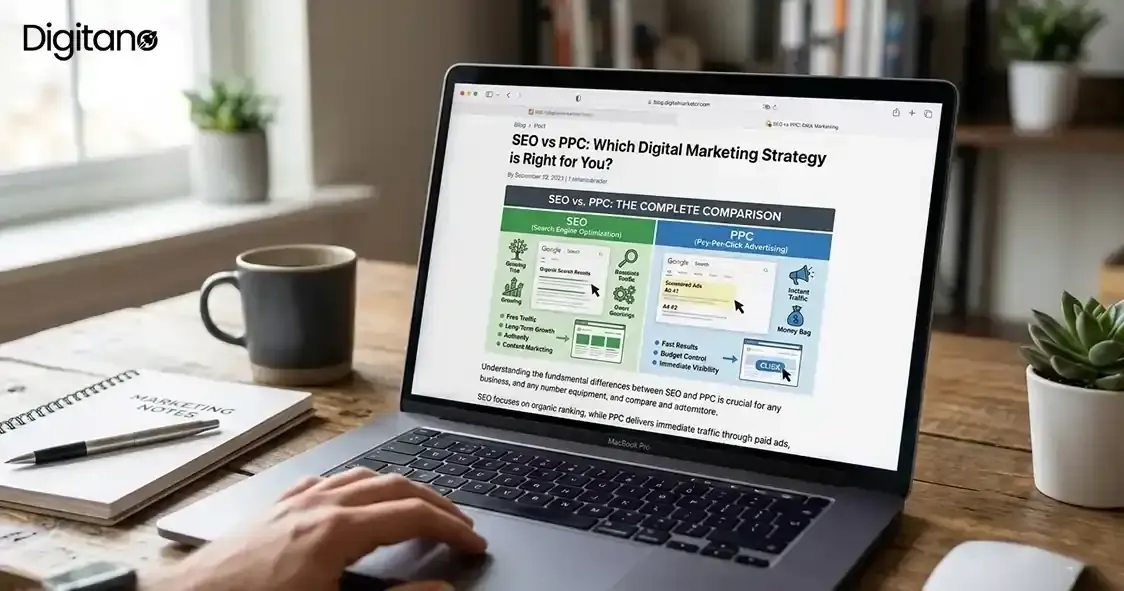
Four key considerations are necessary to fully understand the SEO vs PPC comparison: cost, speed, traffic quality, and sustainability.
Each has a different cost. Clicks are free, but SEO demands investment in technical advancements, optimization, and content. PPC demands recurring payments from each visitor. While PPC can become costly if campaigns are not properly optimized, SEO typically becomes more cost-effective over time.
Another significant difference in SEO vs paid ads is time. PPC yields results right away. Prior to rankings improving, SEO requires patience and frequently takes several months.
The quality of traffic can differ. Users who are actively looking for answers are a common source of SEO traffic, which can indicate increased trust. Although poorly targeted PPC traffic can quickly waste budget, highly targeted PPC traffic is possible, particularly when campaigns are well-structured.
Pros and Cons of SEO
SEO offers significant long-term benefits. Because consumers are more likely to believe organic results than advertisements, it increases credibility. Additionally, it generates steady traffic without charging for each visitor. Strong SEO has the potential to grow into one of the most economical marketing avenues over time.
SEO, though, takes time. It calls for dedication, regular updates, and steady content enhancements. Additionally, competition can be fierce, particularly in sectors where numerous companies are competing for the same keywords. Strategy, quality, and persistence determine results.
Pros and Cons of PPC
The speed of PPC advertising is well-known. You can start a campaign right now and see traffic in a matter of hours. Because it is so measurable, you can quickly make adjustments and see exactly which advertisements are effective. Additionally, it enables accurate targeting according to audience behavior, device, or location.
Cost is a drawback. The SEO vs PPC cost difference becomes clear over time because every click has a price. That cost can increase rapidly in industries with intense competition. Campaign budgets may vanish without producing significant outcomes if they are not properly monitored.
SEO vs PPC for Small Businesses
For smaller businesses, the decision is frequently based on goals, timetable, and budget. Because SEO creates long-term value without charging for each visitor, businesses with limited resources may favor it. However, for instant visibility, companies launching a new product or promotion might favor PPC.
In practice, choosing between SEO and PPC for small businesses rarely comes down to which is superior overall. It concerns which resolves the current issue. PPC can assist if you need traffic right away. SEO is frequently the better basis if you want consistent growth over time.
When to Choose SEO
SEO works best when your goal is long-term growth. It is ideal for businesses that want sustainable traffic, stronger brand credibility, and lower acquisition costs over time. If you are willing to invest consistently and wait for results, SEO can become a reliable source of leads.
It is especially useful for businesses that rely on informational searches, local discovery, or recurring customer needs. When done properly, SEO builds authority that compounds over months and years.
When to Choose PPC
PPC is the better choice when speed matters. If you are launching a new service, promoting a limited-time offer, or entering a competitive market, paid ads can help you gain visibility immediately. PPC also works well for testing ideas because you can measure performance quickly and adjust strategy.
Businesses that need predictable traffic or operate in industries where organic ranking is difficult often benefit from PPC campaigns. It provides control, flexibility, and fast feedback.
SEO and PPC Together: The Smart Strategy
The smartest approach is often not choosing between them, but combining them. SEO builds your long-term presence while PPC delivers immediate traffic. Together, they create balance. You get visibility now while building authority for the future.
Many successful businesses use PPC to test keywords and then apply those insights to SEO content. Others use SEO to capture steady traffic and PPC to support seasonal promotions. When aligned properly, both strategies strengthen each other rather than compete.
Final Verdict
So, SEO or PPC which is better? The honest answer is neither is universally better. They serve different purposes. SEO is a long-term investment that builds lasting visibility. PPC is a fast-acting tool that delivers immediate results.
For most small businesses, the smartest decision is not choosing one over the other. It is understanding when to use each. Start with the strategy that matches your current needs, then expand as your business grows. Digital marketing works best when it is practical, intentional, and aligned with real goals, not trends or guesswork.
FAQs
Q1. What is the main difference between SEO and PPC?
A. SEO earns traffic organically over time, while PPC brings paid traffic instantly.
Q2. Is SEO cheaper than PPC?
A. Long term, yes. SEO requires upfront effort but does not charge per click like PPC.
Q3. Can small businesses use both SEO and PPC?
A. Yes. Many small businesses combine both to balance immediate visibility and long-term growth.
Q4. Does PPC improve SEO rankings?
A. No. Paid ads do not directly affect organic rankings, though they can increase visibility.
Q5. Which is better for quick sales?
A. PPC is usually better for immediate results because it can generate traffic as soon as ads go live.
Q6. Is SEO still worth it today?
A. Yes. SEO remains one of the most reliable ways to attract consistent, high-intent traffic over time.