No hype. No fluff. Just what's actually working and the numbers to prove it.
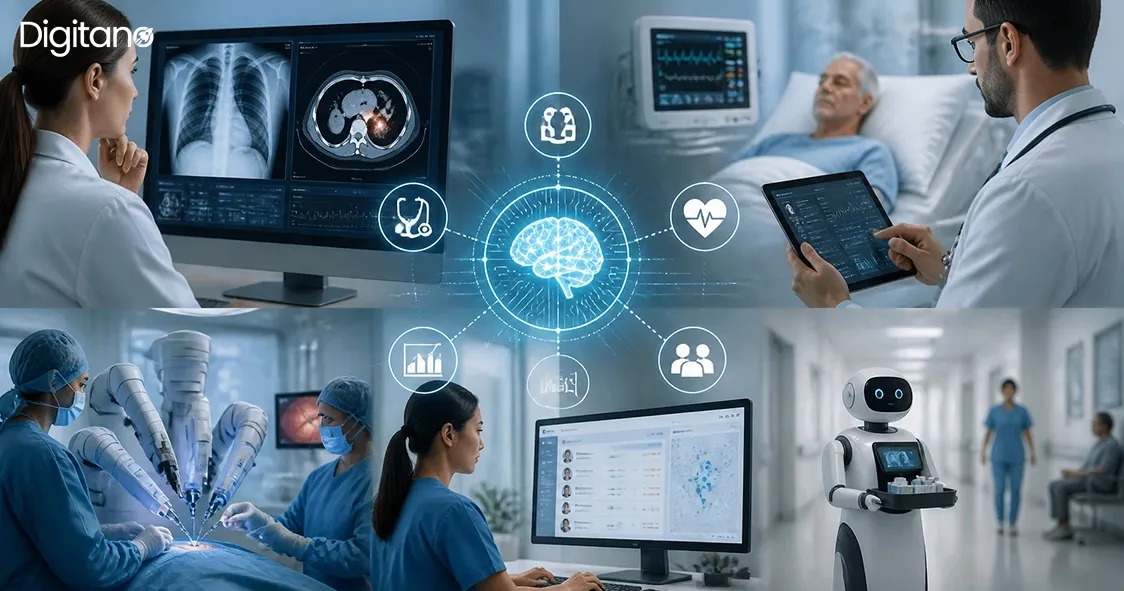
Picture this. A radiologist named Dr. Amina sits in a hospital in Manchester. She has 200 chest scans to review today. Before AI, that meant hours of intense focus, eye strain, and the quiet fear of missing something tiny but critical. Today, an AI tool pre-screens every scan, flags the ones that need urgent attention, and ranks them by priority. Dr. Amina still makes the final call but she's reviewing smarter, not harder, and her patients are getting answers faster.
That's not a story about the future. That's happening right now, in hospitals across the world.
AI in healthcare has moved well past the "interesting experiment" stage. In 2026, it is producing real, measurable results: shorter wait times, earlier diagnoses, fewer medical errors, and billions saved in administrative costs. This blog breaks down exactly where AI is delivering, what the numbers actually say, and what it means for patients and healthcare workers alike.
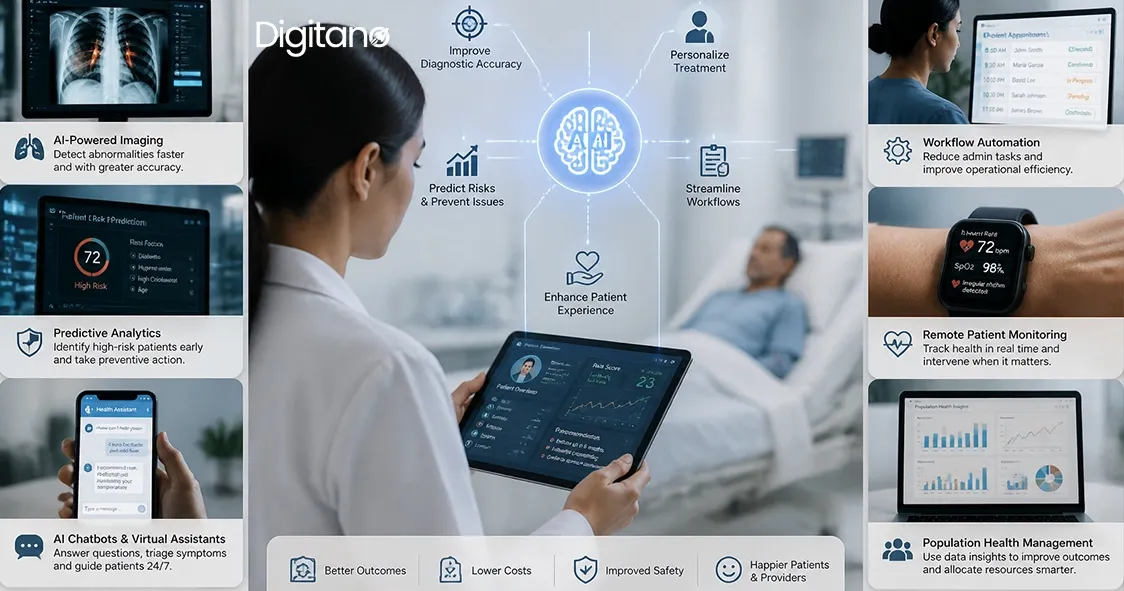
The Big Picture — Just How Fast Is This Growing?
Let's start with the numbers because they're genuinely staggering.
The global AI in healthcare market was valued at $36.67 billion in 2025 and is projected to reach $505 billion by 2033 growing at a compound annual growth rate of nearly 39%. That's not a niche technology story. That's a fundamental reshaping of one of the world's largest industries.
For every $1 spent on AI in healthcare, hospitals are seeing an average return of $3.20, typically within 14 months of implementation. And 74% of U.S. hospitals now use AI-powered diagnostic tools in their radiology departments. These aren't pilot programs anymore. This is mainstream.
What's driving this? Three things: the explosion of patient data that humans simply can't process fast enough, a global shortage of healthcare workers that isn't going away, and a growing body of proof that AI genuinely improves outcomes.
Where AI Is Actually Making a Difference
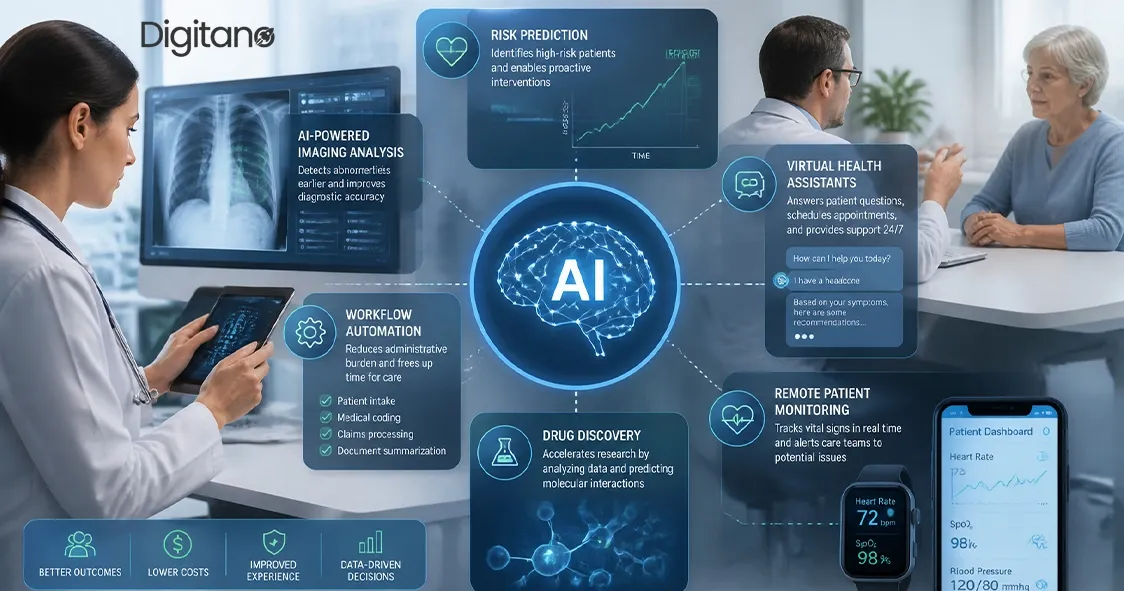
1. Medical Imaging — Catching What the Human Eye Misses
This is where AI has made its most dramatic impact, and for good reason.
Medical imaging X-rays, CT scans, MRIs generate enormous amounts of data. A single CT scan can contain thousands of images. Radiologists are human. They get tired. They have bad days. AI doesn't.
The numbers here are striking. AI algorithms now achieve up to 94% accuracy in tumor detection, exceeding human performance in controlled settings. Radiologists working with AI detect lesions 26% faster and identify nearly 30% more cases than they would without it. One study involving over 14,000 patients found that an AI system called DeepRhythmAI had a false-negative rate of just 0.3%, compared to 4.4% for human technicians. In practical terms, that means far fewer missed diagnoses.
Real-world example: Google's DeepMind developed an AI system trained on eye scans that can detect over 50 eye diseases as accurately as a world-leading specialist. Moorfields Eye Hospital in London deployed it to help triage patients meaning people who needed urgent care were seen faster, and those who could wait didn't block the system.
2. Clinical Documentation — Giving Doctors Their Time Back
Here's a statistic that should shock anyone who hasn't worked in healthcare: the average physician spends 2–3 hours on documentation for every hour of patient care. Emergency physicians sometimes finish paperwork for 8–12 hours after their clinical shifts end.
That's not just bad for doctors. It's bad for patients. A tired, burned-out doctor who spent half their shift typing notes is not giving their best when the next patient walks in.
AI-powered ambient scribes are changing this. These tools listen to the doctor-patient conversation (with consent), understand the context, and automatically generate clinical notes. The results are dramatic. Clinician burnout dropped from 51.9% to 38.8% after short-term use of AI-assisted documentation tools. Tools like ambient scribes are projected to save clinicians 15–20% of their time that goes back to actual patient care.
Real-world example: A family medicine clinic in Texas introduced an AI documentation tool for its physicians. Within three months, doctors reported spending 90 fewer minutes per day on paperwork. One GP said: "I actually made eye contact with my patients again. I stopped typing mid-conversation."
3. Predictive Analytics — Stopping Problems Before They Start
One of the most valuable things AI can do in healthcare is predict and then prevent.
Hospitals are now using AI to flag patients who are at risk of sepsis, heart failure, falls, or readmission before those events happen. This is called predictive analytics, and it is genuinely saving lives.
71% of U.S. acute-care hospitals have now integrated predictive AI into their electronic health record (EHR) systems, up from 66% the year before. AI-supported hospitals report a 42% reduction in diagnostic errors compared to hospitals without AI. One agentic AI system deployed in 2026 can monitor patients continuously and predict events like sepsis or clinical deterioration with 95% accuracy.
Real-world example: A hospital in the U.S. Midwest implemented an AI system that monitored vital signs, lab results, and patient history in real time. When the system flagged a patient as showing early signs of sepsis before any clinical staff had noticed nurses were alerted and treatment began two hours earlier than it would have otherwise. The patient recovered fully. The clinical team later said the early warning was the difference.
4. Drug Discovery — Compressing a Decade into Years
Drug discovery is one of the most expensive, time-consuming processes in all of science. Developing a new drug from scratch typically takes 10–15 years and costs billions. Most candidates fail somewhere in the pipeline.
AI is dramatically changing that math.
Pharmaceutical companies using AI can now screen millions of molecular structures virtually something that would have taken decades in a lab. AI is reducing drug discovery timelines by 30–50%, according to McKinsey. The drug discovery technologies market is projected to reach $77.6 billion in 2026, fuelled largely by AI-native platforms.
Real-world example: Insilico Medicine used AI to identify a potential drug candidate for a rare lung disease called IPF (idiopathic pulmonary fibrosis). The process from target identification to a clinical candidate took 18 months. The traditional approach would have taken 4–6 years. The drug entered Phase II clinical trials in 2023, a genuine milestone for AI-discovered medicine.
Leading biotechs like Iambic and Generate are expected to have three or more AI-designed drugs in clinical trials by 2026, targeting conditions like ALS and cancer. We are moving from "AI might help" to "AI delivered."
5. Virtual Health Assistants and Remote Monitoring
Healthcare doesn't happen only inside hospitals. For millions of people managing chronic conditions diabetes, heart disease, mental health the real challenge is day-to-day management at home.
AI-powered virtual assistants and remote monitoring tools are filling that gap. Over 60% of digital health users now rely on an AI health assistant for symptom tracking, medication reminders, and condition management. The global telehealth market, heavily supported by AI, is projected to exceed $55 billion in value.
Real-world example: Roche received regulatory approval in 2025 for a continuous glucose monitor integrated with predictive AI that can forecast blood sugar levels up to two hours ahead including overnight projections for up to seven hours. For a diabetic patient, that's not just convenience. That's the difference between waking up and not waking up.
In Webb County, Texas, a rural area with almost no clinical facilities, an AI-powered telehealth kiosk was deployed that gives residents real-time health assessments. People who previously had to drive hours to see a doctor now have access to basic diagnostics without leaving their community.
6. Administrative Work — Quietly Saving Billions
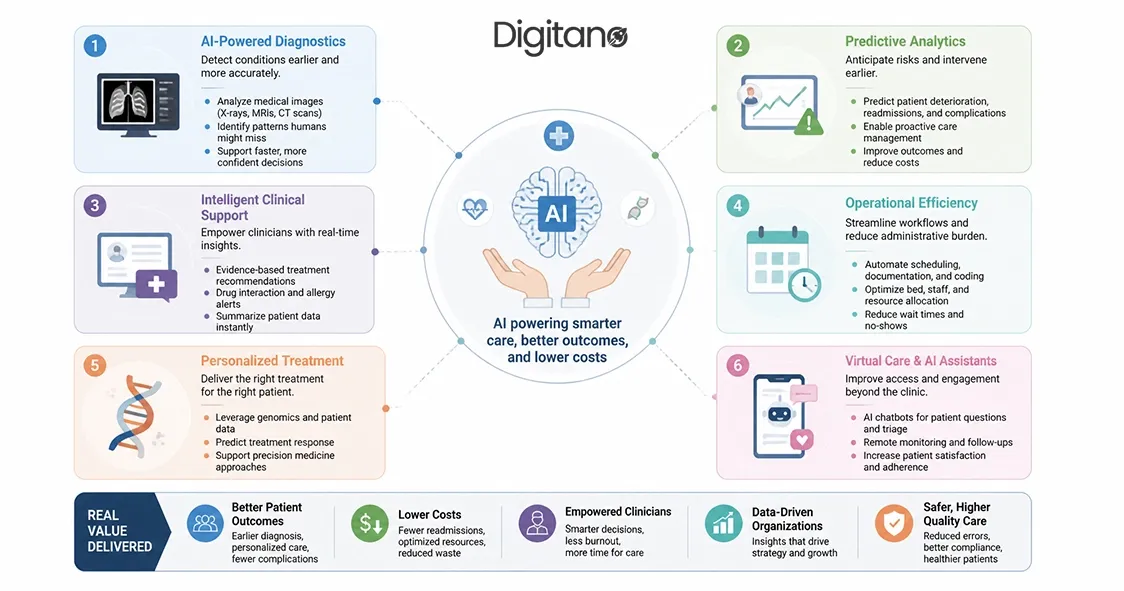
Nobody writes headlines about billing software. But administrative inefficiency in healthcare is a genuinely massive problem, and AI is quietly solving a big chunk of it.
AI is projected to reduce administrative costs by $20 billion annually in the U.S. alone. By 2026, over 30% of U.S. healthcare organizations have moved to autonomous or semi-autonomous revenue cycle management (RCM) that's the billing, claims, and reimbursement process that keeps hospitals financially viable.
AI tools handle appointment scheduling, claims adjudication, prior authorizations, and billing errors at a speed and accuracy no human team can match. And 92% of healthcare leaders believe that AI automation directly addresses staffing shortages, a problem that isn't going away.
The Honest Truth: Where AI Still Has Limits
It wouldn't be a fair piece without this section.
AI in healthcare is powerful, but it is not perfect, and some challenges are real.
Bias is a genuine concern. AI models trained on non-diverse data don't always perform equally across different patient populations. A diagnostic algorithm trained mostly on data from white European patients may underperform for patients from other backgrounds. This is an active area of research and regulation.
Data privacy is critical. AI systems need access to vast amounts of patient data to learn and improve. Ensuring that data is handled securely and ethically is non-negotiable. The FDA and other regulators are moving to create clearer frameworks, but governance is still catching up with capability.
Doctors still need to trust it. A 2025 AMA survey found that while 66% of physicians now use AI health tools (up from 38% in 2023), many remain cautious about letting AI influence diagnosis and treatment decisions. That caution isn't unreasonable. The best outcomes happen when AI supports clinical judgment, not replaces it.
What This Means for Patients
If you're a patient and all of us are, eventually here's what this shift means for you in practical terms.
Diagnoses are getting more accurate and faster. Drugs that might have taken 15 years to develop are being developed in 5. Your doctor has more time with you because AI is handling the paperwork. If you're managing a chronic condition at home, AI tools can alert your care team before a problem becomes a crisis.
The system is not perfect. But it is measurably better than it was five years ago, and it's improving fast.
Frequently Asked Questions (FAQs)
Q1: Is AI actually safe to use in healthcare?
A: Yes, when properly governed. Over 340 FDA-approved AI tools are currently being used in clinical settings, primarily for diagnostic purposes. That said, safety requires proper validation, testing, and human oversight. AI tools go through rigorous regulatory review before deployment. The key principle is that AI supports clinical decision-making; it doesn't replace it. A doctor still reviews the AI's output and makes the final call.
Q2: Will AI replace doctors and nurses?
A: No, at least not in any meaningful timeframe. What AI replaces is the repetitive, administrative, and pattern-recognition work that takes time away from actual care. Doctors spend less time on paperwork and more time with patients. Nurses are alerted to problems earlier so they can intervene faster. The roles evolve, but the human judgment, empathy, and contextual understanding that good healthcare requires simply cannot be automated. In fact, 92% of healthcare leaders say AI helps address staffing shortages not by removing staff, but by making existing staff more effective.
Q3: How is AI improving cancer diagnosis specifically?
A: Several ways. AI can analyze medical imaging to detect tumors at stages that are often invisible to the human eye. It can analyze genomic data to identify specific cancer mutations and recommend personalized treatment plans. It can predict how a patient will respond to chemotherapy before treatment begins, reducing unnecessary side effects. AI algorithms now achieve up to 94% accuracy in tumor detection, and in several controlled studies, they outperform experienced radiologists on specific tasks.
Q4: What is an AI ambient scribe and how does it work?
A: An ambient scribe is an AI tool that listens to the conversation between a doctor and a patient during a consultation (with the patient's consent) and automatically generates clinical notes. It understands medical terminology, captures relevant details from the conversation, and structures them into a proper medical record. The doctor reviews and approves the note before it's filed. The result is that physicians spend dramatically less time typing notes after appointments, which reduces burnout and frees up time for patient care.
Q5: How does AI help patients in rural or remote areas?
A: This is one of the most impactful applications. AI-powered telehealth tools allow patients in areas with no nearby hospital or clinic to access basic diagnostics and health assessments remotely. AI symptom checkers, chatbots, and monitoring tools give people who previously had little or no healthcare access a meaningful first point of contact. For example, AI kiosks in rural Texas are giving communities without clinical facilities access to real-time health assessments. Similarly, AI malaria prediction tools in parts of Africa are helping health officials prevent outbreaks before they spread.
Q6: Is my health data safe when AI is used?
A: It should be, and healthcare AI is subject to strict regulations including HIPAA in the United States that govern how patient data is stored, used, and protected. Reputable AI healthcare companies use anonymization, encryption, and access controls to protect data. However, like any area of digital health, risks exist and it's reasonable to ask your healthcare provider how your data is being used. Regulatory frameworks are actively evolving to keep pace with AI adoption.
Q7: How does AI help with drug development?
A: Traditional drug discovery involves manually screening thousands of chemical compounds to find ones that might work against a specific disease, a process that can take decades. AI can virtually screen millions of molecular structures in days, predict how compounds will behave in the body, identify side effects early, and help design clinical trials more efficiently. This is reducing drug discovery timelines by 30–50%. Several AI-discovered drugs are now in clinical trials, and the first fully AI-designed drugs are expected to receive regulatory approval within the next few years.
Q8: What is predictive analytics in healthcare and why does it matter?
A: Predictive analytics uses AI to analyze a patient's health data vital signs, lab results, medical history and identify early warning signs of a serious condition before it becomes a crisis. Hospitals use it to flag patients at risk of sepsis, heart failure, falls, or readmission. It matters because early intervention almost always leads to better outcomes and lower costs. Treating a patient for early-stage sepsis is far simpler and cheaper than treating them for advanced sepsis in an ICU. AI systems in 2026 can predict clinical deterioration events with up to 95% accuracy.
Q9: Are AI healthcare tools available for everyday consumers?
A: Yes, and adoption is growing fast. AI symptom checkers, virtual health assistants, and condition management apps are widely available. Over 60% of digital health users now use an AI health assistant for symptom tracking, medication reminders, and health insights. Wearables with AI-powered monitoring for heart rate, glucose, sleep, and more are becoming standard. That said, consumer AI health tools are designed for general guidance, not clinical diagnosis. They're most valuable as a complement to professional healthcare, not a replacement.
Q10: What's the biggest challenge holding AI in healthcare back?
A: Honestly, it's trust and governance not the technology itself. Many physicians are still cautious about relying on AI for clinical decisions, which is understandable given the stakes. Data bias is a real issue. AI models trained on non-diverse datasets don't always work equally well for all patients. And regulatory frameworks are still catching up with how fast the technology is moving. The organizations making the most progress are those that pair strong AI capability with clear governance, transparent data practices, and a culture of human oversight.
Final Thought
AI in healthcare is no longer a promise. It is a track record.
The patients who benefited most from it in 2026 weren't in science fiction stories. They were in real hospitals, real clinics, and real homes. The radiologist who caught the tumor earlier. The diabetic patient whose blood sugar was managed through the night. The drug that reached clinical trial in two years instead of six.
This is what practical AI looks like. Not robots replacing doctors. AI making doctors better.