If you built your online store on Shopify, BigCommerce, or Wix in the last decade, you probably remember how exciting it felt. Everything was in one place. Your products, your checkout, your theme, your analytics. You paid one bill, logged into one dashboard, and your store was live. Simple. Clean. Done.
That model worked really well, for a while.
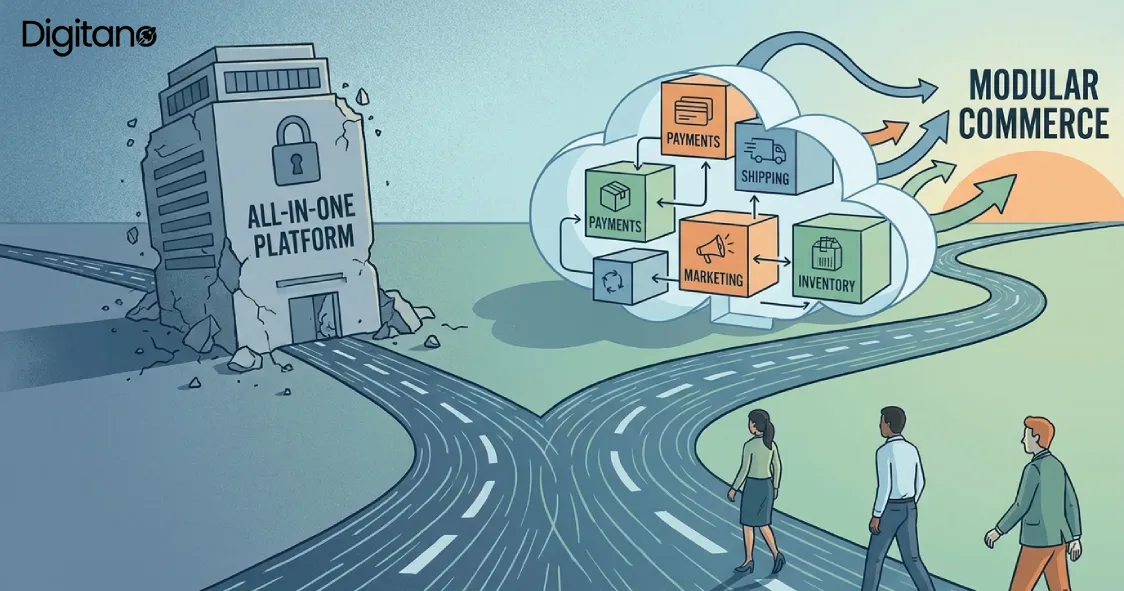
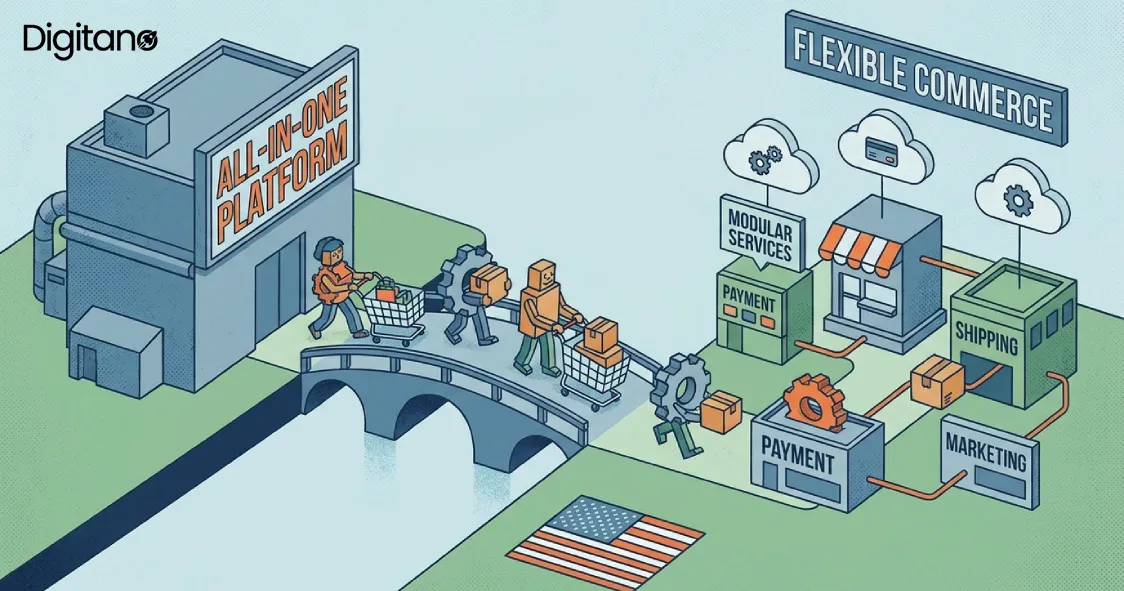
But something started shifting around 2023, picked up serious speed in 2024 and 2025, and by 2026 has become one of the most talked-about trends in US retail: major retailers are quietly (and sometimes very publicly) walking away from all-in-one e-commerce platforms. They are building what the industry now calls "composable" or "headless" commerce stacks, custom-built systems that give them far more control, flexibility, and performance.
In this piece, I want to break down exactly why this is happening, who is doing it, what the numbers say, and what it might mean for your own business. I will keep things human and clear, no unnecessary jargon, just the real story.
1. First, Let's Be Clear: What Is an All-in-One Platform?
When we say "all-in-one e-commerce platform," we are talking about tools like Shopify, BigCommerce, Wix, Squarespace, and Salesforce Commerce Cloud's managed version. These platforms give you everything bundled together:
- Product catalog and inventory management
- Shopping cart and checkout
- Payment processing
- Website hosting
- Basic marketing tools
- App marketplace for add-ons
For a small business getting started, this is genuinely wonderful. You do not need developers. You do not need to understand servers or databases. You just pick a template, upload your products, and start selling. Millions of businesses have been built this way.
The problem is not that these platforms are bad. The problem is what happens when your business grows beyond what the platform was designed to handle.
2. The Numbers That Tell the Story
Let's look at what the data actually says before we dive into the stories.
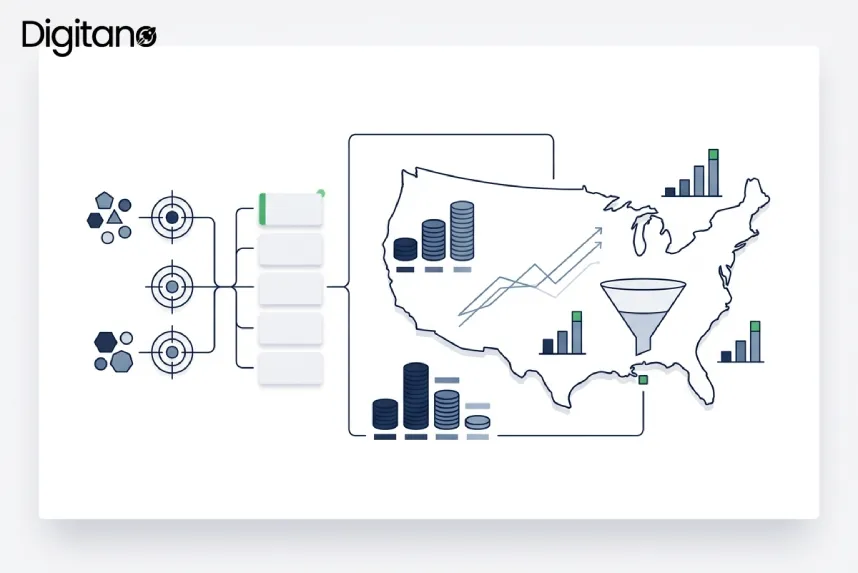
That Gartner figure is the one worth sitting with. Nearly four in ten US retailers are already planning to leave or significantly reduce their dependence on a single all-in-one platform. That is not a fringe movement. That is a structural shift.
3. Real Companies That Made the Move And What Happened
This is the part that makes it real. Let's look at actual US retailers who left or dramatically scaled back their use of all-in-one platforms, and what they found on the other side.
4. The 6 Real Reasons Retailers Are Leaving
So what is actually driving this? I want to give you the six real reasons, not the marketing version, but the honest, ground-level version that retailers themselves talk about.
Reason 1: Performance Hits a Wall
All-in-one platforms run on shared infrastructure. Your store lives alongside thousands or millions of other stores on the same system. When your traffic spikes: Black Friday, a viral product, a TV appearance you are competing for that shared infrastructure with every other store on the platform. Retailers doing serious volume cannot accept this uncertainty. A 1-second delay in page load time reduces conversions by 7%. For a business doing $50 million a year, that is $3.5 million in lost revenue from one second of slowness.
Reason 2: The App Tax Adds Up Fast
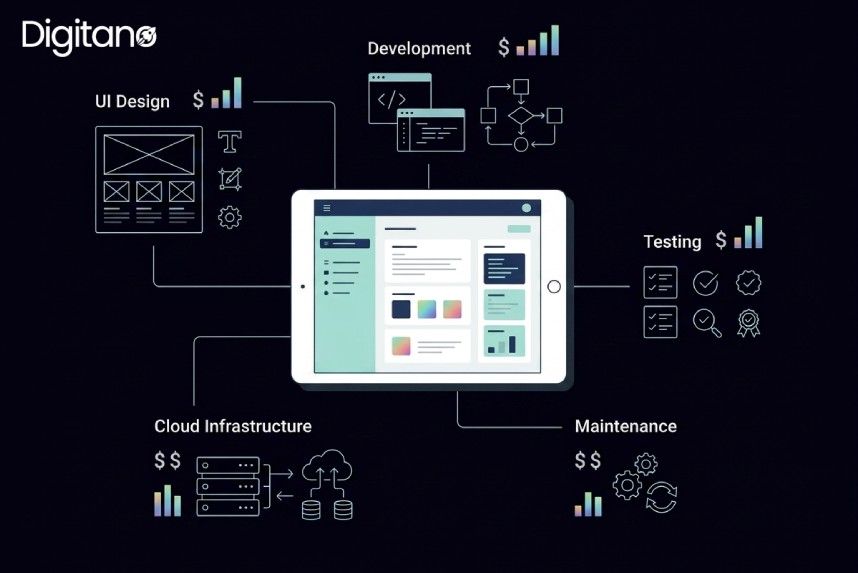
The app marketplace model sounds great until you realise you are paying $50 to $300 per month for each of the 20 to 40 apps you need to make your store functional. Subscription management: $199/month. Advanced loyalty program: $299/month. B2B wholesale portal: $249/month. Personalised recommendations: $199/month. International pricing: $149/month. These add up to $30,000 to $80,000 per year in app fees for functionality that a custom build would handle natively, once, for a fixed development cost.
Reason 3: Transaction Fees at Scale Are Brutal
We touched on this earlier but it deserves its own section. Shopify charges 0.5% to 2% per transaction unless you use Shopify Payments. For retailers in categories where Shopify Payments is not available, certain supplements, CBD products, tobacco accessories, some firearms accessories, they have no choice but to pay the fee. At $20 million in revenue, a 1% transaction fee is $200,000 per year. Every year. That money funds a full development team that builds you a better platform.
Reason 4: You Do Not Own Your Data
This one keeps retail executives up at night. When your store lives on Shopify or BigCommerce, your customer data lives there too. You can export it, yes. But the platform controls the infrastructure, the data format, and ultimately the terms under which you can access your own customer information. In an era when first-party data is the most valuable asset a retailer can own, especially post-cookie, with privacy regulations tightening, handing that data sovereignty to a platform vendor is a risk that many retailers are no longer willing to take.
Reason 5: You Cannot Build What You Can Imagine
Every platform has a ceiling on customisation. Shopify's Liquid templating language is powerful but it has hard limits. You cannot build genuinely novel checkout experiences, truly custom product configurators, or unique loyalty mechanics without fighting the platform's own design system. When your competitor down the street has the same Shopify template with a different logo and colour scheme, differentiation becomes very hard. Brands that built their entire identity on a unique customer experience like Glossier or Away, simply outgrew what the platform could offer.
Reason 6: Vendor Lock-In Is a Business Risk
What happens if Shopify raises its prices, which it did, significantly, in 2023? What happens if they change their terms of service? What happens if a competitor platform offers something dramatically better but you cannot move because your entire business is embedded in one vendor's ecosystem? The retailers that went through the 2023 Shopify price increases and the 2024 terms-of-service changes around checkout customisation learned this lesson the hard way. Having your entire revenue stream dependent on one vendor's decisions is a strategic vulnerability that many retail CFOs are no longer comfortable with.
5. All-in-One vs. Composable Commerce: Side-by-Side
Before you make any decisions, here is an honest comparison. Neither approach is universally better. The right answer depends entirely on where your business is right now and where it is going.
6. So What Are They Building Instead?
When retailers leave all-in-one platforms, they do not just leave. They build something new. Here is what the most common alternative architectures look like in 2025 and 2026.
Headless Commerce
In headless commerce, the "head" (the front end that customers see) is separated from the "body" (the back-end commerce logic, inventory, payments). You build the front end using modern web frameworks like React, Next.js, or Vue.js, and connect it to best-in-class services for each function via APIs. The result is a blazing-fast, fully custom storefront with complete design freedom. Many retailers keep Shopify as a back end for its payments and order management, but replace Shopify's front end entirely with a custom-built experience.
MACH Architecture
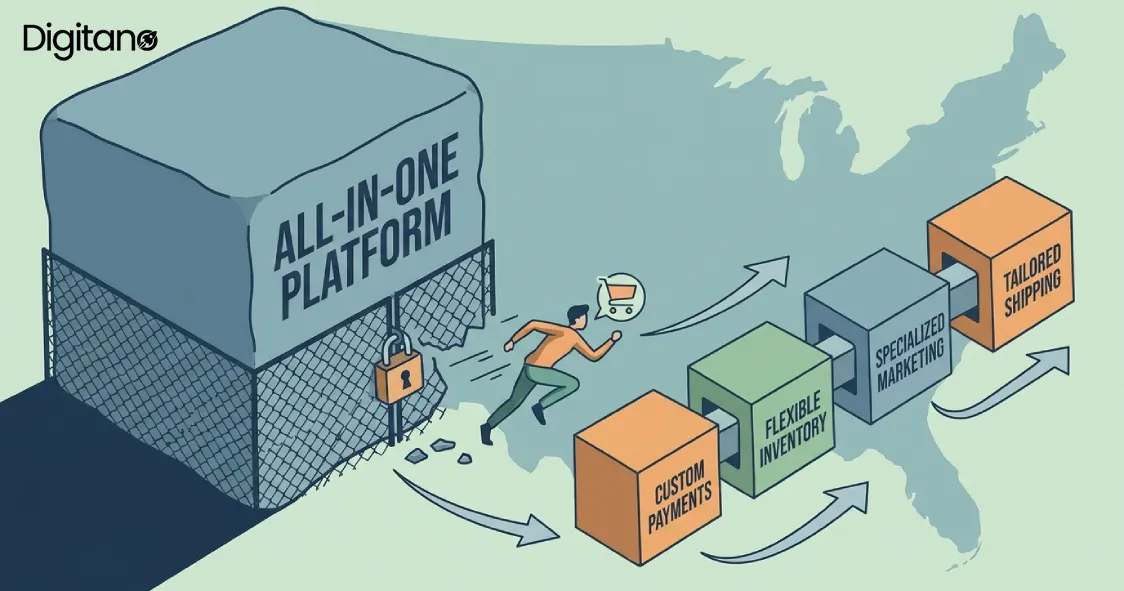
MACH stands for Microservices, API-first, Cloud-native, Headless. It is the enterprise version of composable commerce. Instead of one monolithic system, you build your commerce stack from best-in-class individual services: Commercetools or Fabric for product and order management, Stripe or Braintree for payments, Contentful or Sanity for content management, Algolia for search, Klaviyo for email marketing, and so on. Each piece is independently replaceable. If a better payment processor comes along, you swap it out without touching anything else.
Hybrid Approaches
Not everyone goes all the way. Many mid-size retailers in 2025 and 2026 are taking a hybrid approach: keeping Shopify or BigCommerce as their commerce back end for its reliability and payment infrastructure, but building a custom front end and replacing high-cost apps with custom-built internal tools. This gives them 80% of the benefits of a full composable build at a fraction of the cost and risk.
7. What Specifically Changed From 2025 to 2026
The shift away from all-in-one platforms did not happen overnight. Here is how the story evolved from 2025 into 2026.
2025: The Tipping Point Year
In 2025, the conversation moved from "should we consider alternatives?" to "how quickly can we move?" Three things happened simultaneously. First, Shopify rolled out major restrictions on checkout customisation for non-Shopify-Payments merchants, which frustrated large retailers who needed custom checkout flows. Second, Commercetools, Fabric, and other MACH-compliant platforms dropped their entry prices significantly, making enterprise-grade composable commerce accessible to mid-market retailers for the first time. Third, a wave of well-publicised success stories, brands reporting 20% to 40% performance improvements after going headless gave retail decision-makers the proof points they needed to get board approval for the investment.
2026: Composable Commerce Goes Mainstream
By early 2026, composable commerce is no longer a cutting-edge experiment. It is mainstream practice for retailers above $5 million in annual revenue. The Gartner Digital Commerce Hype Cycle for 2026 moved headless commerce out of the "peak of inflated expectations" and into the "slope of enlightenment" meaning it works, businesses are doing it, and the results are predictable and measurable. New tooling has made the transition faster and cheaper than ever. Vercel's commerce templates, Shopify Hydrogen (their own headless framework), and BigCommerce's Open SaaS approach have all reduced the engineering effort required to go headless from months to weeks.
AI-Powered Personalisation Changes the Calculus
One more factor specific to 2026: AI-powered personalisation. The retailers who have moved to composable architectures now have complete control over their customer data and can build personalisation layers that simply are not possible on a shared platform. Real-time product recommendations based on browsing behaviour, dynamic pricing for loyalty members, personalised landing pages for different customer segments, and AI-driven search that understands natural language queries. These capabilities are giving early movers a conversion rate advantage that is compounding every month.
8. Should Your Business Make the Move?
This is the question you are probably asking right now. And the honest answer is: it depends on where you are. Here is a simple framework.
You should probably stay on your current platform if:
- You are under $1 million in annual revenue
- You are growing fast and need to move quickly, speed to market matters more than optimisation right now
- You do not have technical resources in-house or budget to hire developers
- Your current platform handles everything you need without painful workarounds
You should seriously evaluate moving if:
- You are above $3 million to $5 million in annual revenue and growing
- You are paying more than $2,000 to $3,000 per month in platform and app fees
- Your site performance is noticeably slow on mobile (over 3 seconds to load)
- You are hitting customisation limits that are frustrating your design or product team
- You are losing data visibility and that is affecting your marketing decisions
- You are paying significant transaction fees because you cannot use the platform's native payments
9. Frequently Asked Questions
Q1: Is Shopify actually dying? Should I be worried?
Q2: How much does it actually cost to go headless or composable?
Q3: Can a small business do this or is it only for big retailers?
Q4: What about Shopify's new headless option, Shopify Hydrogen?
Q5: How long does a migration actually take?
Q6: Will we lose our search engine rankings if we move platforms?
Q7: What is the single biggest mistake retailers make when moving off an all-in-one platform?
Final Thoughts: The Platform Is Not the Business
Here is the most important thing I want you to take away from this. The retailers who are winning in 2025 and 2026 are not winning because of which platform they are on. They are winning because they built a commerce experience that genuinely serves their customers better than anyone else.
Nike does not make great products because they built their own platform. They built their own platform because they make great products and needed the infrastructure to deliver that greatness directly. The platform followed the vision, not the other way around.
If you are a small business on Shopify and your customers love shopping with you, your platform is fine. Do not chase trends for the sake of it.
But if you are growing fast, feeling the walls of your current platform, watching your costs climb, and seeing your technical team spend more time fighting the system than building for customers, then what you are reading about here is not a trend. It is a solution.
The tools exist. The knowledge exists. The case studies exist. More US retailers than ever before have done this successfully and are willing to talk about it. The question is not whether composable commerce works. The question is whether the time is right for your business.