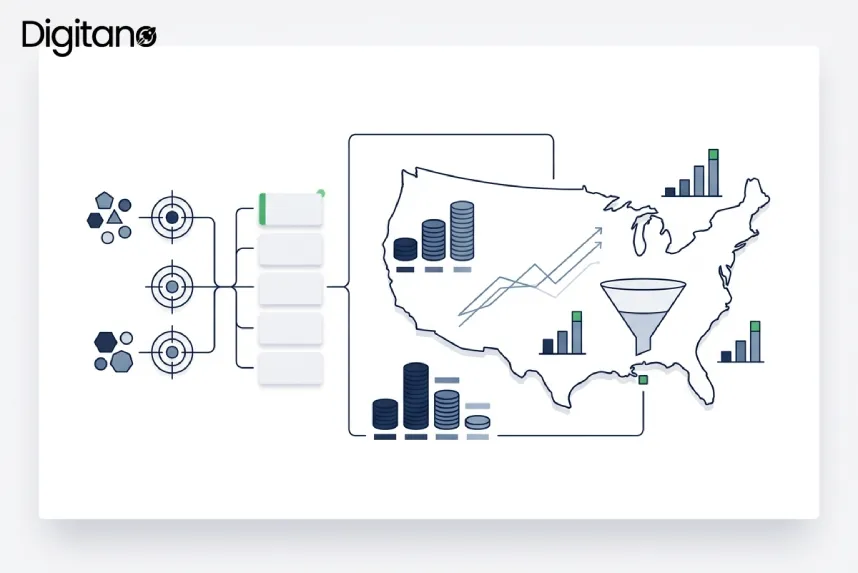

The frustrating (and honest) answer is: it depends. A lot. Website development costs in the USA in 2026 range anywhere from a few hundred dollars to well over $500,000. That's not a dodge it's a reflection of how wildly different websites can be.
But don't worry. By the end of this guide, you'll have a clear, realistic picture of what you should expect to pay based on what you actually need and how to avoid overpaying or making costly mistakes.
1. The 2026 Cost Snapshot
Before we go deep, here's a quick reference for average website development costs across different project sizes in the United States right now:
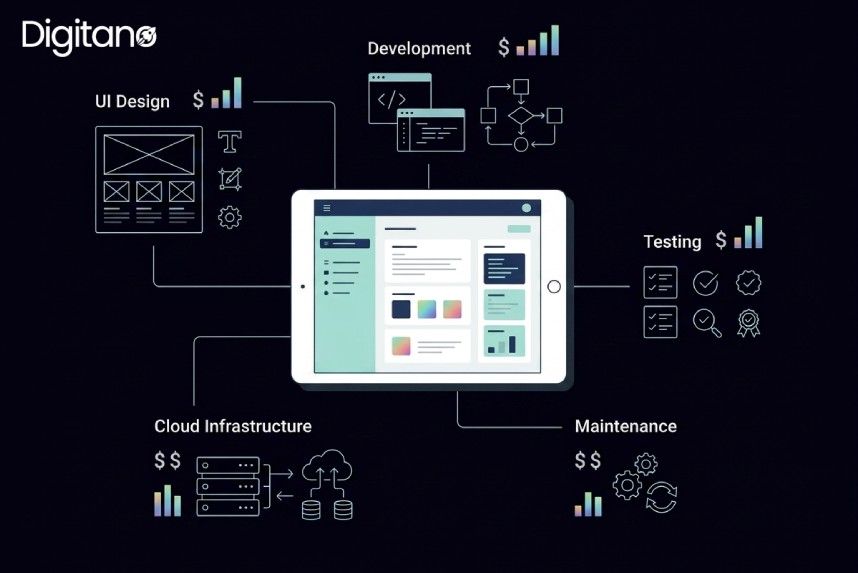
2. What Actually Drives the Price?
If you ask 10 agencies for a quote and get 10 wildly different numbers, it's not chaos it's these factors playing out differently in each proposal.
1. Design Complexity
A templated site with minimal customization costs a fraction of a fully bespoke design. Custom UI/UX work wireframes, prototypes, unique visual identity can alone account for $3,000 to $20,000 of a project budget at a reputable agency.
2. Number of Pages and Features
A 5-page brochure site is a completely different beast than a 200-page site with user accounts, search filters, and payment processing. According to WebFX (webfx.com), adding a blog adds roughly $1,000–$3,000, an e-commerce store adds $2,000–$25,000, and custom web applications can push projects into six-figure territory.
3. Content Management System (CMS)
WordPress remains the dominant CMS, powering over 43% of all websites as of 2026. It's affordable and flexible. Headless CMS options like Contentful or Sanity, or platforms like Webflow, add cost but deliver performance and scalability advantages for growing brands.
4. Who You Hire
Geography and experience matter enormously. A senior developer in New York or San Francisco charges $150–$250/hr. An experienced mid-market freelancer in the Midwest might charge $75–$120/hr. An offshore team? $25–$75/hr but communication overhead and quality variance are real trade-offs.
5. SEO and Performance
Building a site that's fast and found costs more upfront. But research cited by Neil Patel shows a 1-second delay in page load time can reduce conversions by up to 7%. Investing in Core Web Vitals optimization, structured data, and proper site architecture is almost always worth it.
3. Cost by Website Type
Here's a practical breakdown of what different website categories tend to cost in the USA in 2026:
4. Freelancer vs Agency vs DIY Which Is Right for You?
This is one of the biggest decisions you'll make, and it's not just about price. Each path has real trade-offs.
DIY Website Builders
Platforms like Squarespace (squarespace.com), Wix (wix.com), and Shopify (shopify.com) let you launch a professional-looking site for $16–$40/month with no coding knowledge. They're excellent for solopreneurs and micro-businesses. The downside? Limited customization and you'll hit their ceilings fast if your needs grow.
Freelance Developers
The US freelance web development market is enormous. Platforms like Upwork (upwork.com) and Toptal (toptal.com) connect you with vetted talent. Freelancers typically cost 30–50% less than agencies for equivalent work. The risk? If your freelancer disappears mid-project or has no designer on staff, you bear that burden alone.
Web Design Agencies
Agencies bring a full team designers, developers, strategists, project managers. According to Clutch's 2025 survey (clutch.co), the average hourly rate for a US web design agency is between $100–$200/hr. You pay a premium, but you get accountability, process, and (usually) a reliable timeline.
For most small businesses, a combination works best: hire a freelancer for development, use a service like Figma-based design templates or an independent designer, and bring in an agency only when your needs are complex enough to justify it.
5. Ongoing Costs You Must Budget For
Too many businesses get sticker shock not from the build, but from what comes after. Here's what to plan for annually:
6. How to Save Without Cutting Corners
Smart budgeting isn't about going cheap it's about spending right. Here are six practical ways to control costs without sacrificing quality:
1. Start smaller, then scale. Launch a lean 5-page site and add features as your business grows. Don't pay for a 50-page build before you've validated what your customers actually need.
2. Use a proven framework. Don't reinvent the wheel. A custom WordPress or Webflow build on a solid foundation costs far less than a bespoke CMS built from scratch and it's easier to hand off later.
3. Prepare your content before development starts. Nothing drags timelines (and bills) out like waiting for copy and images. Developers billing hourly who are blocked by missing content is one of the most common budget-killers.
4. Get multiple quotes and ask for itemized breakdowns. A single quote tells you nothing. Three quotes tells you the market. Five gives you real negotiating power. And always ask what's included vs. billed as extras.
5. Prioritize SEO during the build, not after. Retrofitting SEO onto a poorly structured site is expensive. According to Moz (moz.com), technical SEO decisions made at build time site structure, URL schema, page speed have lasting impact on search rankings.
6. Negotiate a maintenance retainer from day one. Getting ongoing support set up before you need it is always cheaper than scrambling for help when something breaks at 2am on a Sunday.
7. Frequently Asked Questions
Q: How long does it take to build a website?
A simple 5-page business website typically takes 4–8 weeks from kick-off to launch. A mid-range custom site with CMS integration runs 8–16 weeks. Large enterprise builds or complex web applications can take 6–18 months. Timelines stretch when client-side content delivery is delayed, which is more common than developers like to admit.
Q: Can I build a website for free?
Technically yes platforms like Wix, WordPress.com, and Google Sites offer free tiers. But free plans usually mean a subdomain (yourbusiness.wix.com), platform branding on your pages, and limited functionality. For a real business, a proper domain and hosting is the minimum you should budget for typically $50–$200/year to start.
Q: Is WordPress still a good choice in 2026?
Yes, absolutely. WordPress powers over 43% of the web and the ecosystem has never been more mature. With page builders like Elementor or the native Block Editor, it's become far more accessible. The main caveat is that WordPress requires more hands-on maintenance than hosted platforms like Squarespace so factor in plugin updates and security monitoring.
Q: What's the difference between web design and web development costs?
Web design covers the visual and UX layer how the site looks, feels, and guides users. Web development is the technical implementation building what the designer created and making it actually work. Many projects bundle both, but on larger builds they're separate disciplines with separate billing. Designers typically charge $50–$150/hr; developers $75–$250/hr depending on specialization and location.
Q: Should I use Shopify or WooCommerce for e-commerce?
Shopify is typically faster to launch and requires less technical maintenance, making it ideal for businesses that want to focus on selling rather than managing software. WooCommerce (WordPress) is more customizable and can be more cost-effective at scale since there are no transaction fees. Shopify plans start at $39/month; WooCommerce itself is free but hosting, plugins, and development add up. For most new stores doing under $500K/year in revenue, Shopify is the more pragmatic choice.
Q: Do I need to pay for SEO separately from my website build?
Yes and this distinction matters. Website development includes technical SEO (site speed, proper heading structure, meta tags, mobile-friendliness). Ongoing SEO is a separate service involving keyword research, content strategy, link building, and performance tracking. Most agencies charge $750–$5,000/month for managed SEO services. You can also do it yourself using tools like Ahrefs, SEMrush, or the free tier of Google Search Console.
Q: What should I look for in a web development contract?
Always ensure your contract specifies: who owns the final code and assets (you should), what's included in the quoted price vs. billed as extras, payment milestones (never pay 100% upfront), revision rounds included, timeline commitments, and what happens if the project runs over scope. It's worth a lawyer's review for any project over $10,000.
Q: How do I know if an agency is overcharging me?
Get at least 3 itemized proposals. Use resources like Clutch.co, GoodFirms, and UpCity to research average rates and read client reviews. Red flags include vague scope documents, upfront payment demands of more than 30–50%, and reluctance to provide references. A trustworthy agency should welcome questions about how they arrived at their numbers.
The Bottom Line
Website development costs in the USA in 2026 are highly variable but not unknowable. A simple business site can be launched for $3,000–$7,000 with a competent freelancer. A polished custom build from a mid-tier agency will run $15,000–$40,000. Enterprise-grade platforms start at $75,000 and go up from there.
The most important thing isn't finding the cheapest option it's matching your investment to your business stage and goals. A startup validating an idea needs a lean, fast-to-launch site. An established brand competing in a crowded market needs something that converts and ranks. Know what you need, get multiple proposals, read the contracts carefully, and build for growth not just for today.