A Practical, No-Fluff Playbook for Growing Your Business in the Digital Age
You started your business because you are good at what you do. Maybe you are a contractor, a salon owner, a therapist, a baker, or a boutique retailer. You have the skills. You have the service. You just need more customers.
If that sounds familiar, you are in good company. Getting a steady stream of new customers is the number one challenge reported by small business owners across the United States.
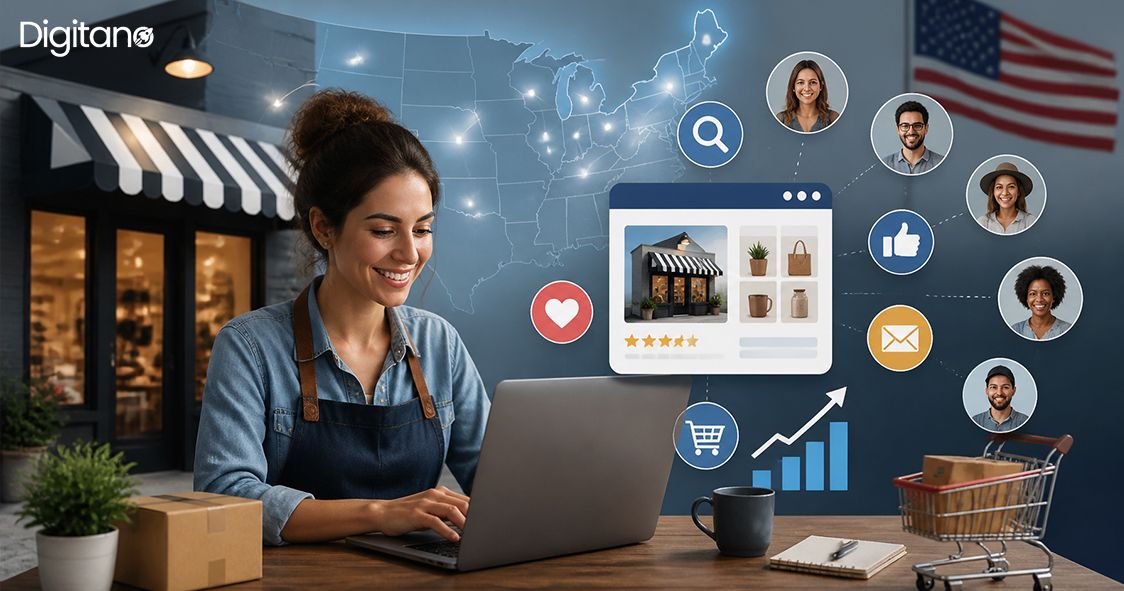
The even bigger truth? The customers you are looking for are already online looking for you. They are typing searches into Google, scrolling through social media, reading reviews on Yelp, and checking out local listings. The question is not whether your customers are online. They absolutely are. The question is whether your business shows up when they go looking.
Key 2026 Stats at a Glance
This guide is here to change that for you. We will walk through the most effective, proven strategies for attracting more customers online in 2026. Everything here is practical, affordable, and designed specifically for small businesses, not Fortune 500 companies with million-dollar marketing budgets. Let us get into it.
Strategy 1: Claim and Optimize Your Google Business Profile
If you only do one thing after reading this article, make it this. Setting up and optimizing your Google Business Profile is the single highest-impact, zero-cost action a small business owner can take to get more customers online.
Your Google Business Profile is what appears in Google Search and Google Maps when someone looks up your business or searches for a business like yours nearby. It shows your name, address, phone number, hours, photos, reviews, and a link to your website. It is often the first impression a potential customer has of your business.
The numbers tell the story clearly in 2026:
Here is how to optimize your profile:
- Fill out every single field completely, including your business description, categories, and services
- Add high-quality, recent photos of your business, products, team, and location businesses in positions 1-3 on local search have an average of 250+ images
- Set accurate business hours and keep them updated during holidays
- Respond to every review, both positive and negative, aim for responses of at least 100-140 words, as detailed responses correlate with higher rankings
- Post weekly updates, offers, or announcements using the Posts feature profiles with regular updates appear 2.8x more frequently in top 3 map results
- Enable messaging so customers can contact you directly from your profile, businesses using the messaging feature see 33% higher engagement
- Build toward 50+ reviews businesses with 50+ Google reviews earn 266% more leads than those with fewer than 10 (OnTheMap, 2025)
This is completely free and takes a few hours to set up properly. There is genuinely no excuse not to have a fully optimized Google Business Profile in 2026. Note: Google removed in-profile chat and call logs from GBP in 2024, so be sure your profile reflects only the currently available features.
Strategy 2: Build a Website That Actually Converts
Your website is your 24-hour salesperson. It works while you sleep, while you are on a job site, and while you are spending time with your family. But only if it is built to convert visitors into customers.
According to Stanford Web Credibility Research, 75% of consumers admit to making judgments about a company's credibility based on their website design. If your site looks outdated, loads slowly, or does not work on a mobile phone, you are losing customers before they even read a single word about what you offer.
Consider the mobile factor specifically. As of 2025, the majority of Google searches in the US are performed on mobile devices. If your website is not mobile-friendly, you are creating a broken experience for the majority of the people who find you.
A high-converting small business website should have:
- A clear headline on the homepage. Visitors should know within 5 seconds exactly who you help and what you offer.
- A prominent call-to-action. Make it easy for people to call you, book an appointment, or request a quote. The button should be visible without scrolling.
- Social proof. Real customer testimonials, star ratings, and photos from happy clients build trust immediately.
- Fast load speed. According to Google, 53% of mobile users abandon a site that takes more than 3 seconds to load. Use Google PageSpeed Insights to test your site for free.
- Clear contact information. Your phone number, email address, and location should be easy to find on every page.
- AI-readiness. In 2026, AI tools like ChatGPT and Google's AI Overviews are surfacing local business information. Structured data markup (schema.org) helps AI models correctly interpret and cite your business.
Affordable website builders like Squarespace, Wix, and WordPress with a good theme can get you a professional, mobile-friendly site for $15 to $30 per month. The investment pays for itself with a single new customer.
Strategy 3: Use Local SEO to Get Found on Google
Local SEO is the art of getting your business to show up in Google search results when people nearby are looking for what you offer. Think of searches like 'electrician in Dallas', 'best pizza near me', or 'affordable therapist in Brooklyn.' These are high-intent searches. The person searching is ready to buy or book.
Here is why it matters in 2026:
That is a pipeline of warm, ready-to-buy customers actively looking for businesses exactly like yours.
Practical steps for local SEO in 2026:
- Target local keywords. Include your city or neighborhood in your website copy, page titles, and meta descriptions. For example, if you are a plumber in Austin, your homepage title should say something like 'Licensed Plumber in Austin, TX.'
- Create a dedicated service-area page. If you serve multiple towns or neighborhoods, create a separate page for each area. This helps you rank for location-specific searches.
- Get listed in local directories. Beyond Google, make sure you are listed accurately on Yelp, Bing Places, Apple Maps, and any industry-specific directories. Consistent name, address, and phone number information across all platforms is critical 62% of consumers say they would avoid a business if they find incorrect information about it online.
- Build local content. Write blog posts or articles that are genuinely useful to people in your area. A landscaping company in Denver might write about the best grass types for Colorado's climate. This kind of local content attracts search traffic and builds authority.
- Optimize for AI search. Google's AI Overviews now appear in approximately 32% of local queries in 2026. Structured content, FAQ sections, and clear service descriptions help your business get cited in AI-generated answers.
Strategy 4: Build a Steady Stream of Online Reviews
Online reviews are the digital version of word-of-mouth referrals. They are one of the most powerful trust signals a small business can have, and they directly influence both your local SEO rankings and your conversion rate.
The data here is striking for 2026:
A business with 50 reviews and a 4.8-star rating will almost always win over a competitor with no reviews, regardless of price. Note: in 2026, AI assistants like ChatGPT do NOT have access to Google Reviews data. To appear in AI search recommendations, you also need reviews on open platforms like Facebook, Yelp, Trustpilot, and BBB.
Here is a simple system for getting more reviews:
- After completing a job or sale, send a follow-up text or email thanking the customer and including a direct link to your Google review page
- Train your team to verbally ask satisfied customers for a review before they leave
- Add a 'Leave us a review' link to your email signature and website footer
- Respond professionally and promptly to every review, especially negative ones write detailed responses (aim for 100-140 words) as this correlates with higher local rankings
- Build your review presence across multiple platforms not just Google to improve visibility in AI-powered search tools
- Never buy fake reviews. Google actively penalizes this and it destroys the authenticity that makes reviews powerful in the first place
Strategy 5: Use Social Media to Stay Top of Mind
Social media does not replace your website or your Google presence, but it plays a powerful supporting role. It keeps your business visible to people who have already discovered you and builds a community around your brand.
In the United States, 72% of Americans use at least one social media platform (Pew Research), and Facebook remains the dominant marketing platform, used by 84% of small to midsize businesses in 2026 (Statista, 2026). That is not a channel you can ignore.
The key for small businesses is to focus on one or two platforms rather than trying to be everywhere at once. Here is a simple guide:
Consistency matters far more than volume. Posting three times per week with genuinely useful or engaging content will outperform posting every day with content that adds no value. Pick the platform where your customers spend the most time and show up there consistently.
Strategy 6: Start an Email List Today
Email marketing is the most underused tool in the small business toolbox. Many business owners assume it is complicated or expensive. It is neither. And the return on investment is extraordinary.
The 2026 data is clear:
Unlike social media, where your posts only reach a fraction of your followers due to algorithm changes, emails land directly in your customers' inboxes. You own your email list. No algorithm can take it away from you. HubSpot's 2025 State of Marketing report found email to be the channel with the best ROI for B2C brands.
Here is how to get started simply and cheaply:
- Use a free email marketing tool. Mailchimp offers a free plan for up to 500 subscribers. ConvertKit and MailerLite also offer generous free tiers for small businesses just starting out.
- Collect emails everywhere. Add a sign-up form to your website, collect email addresses at the point of sale, and offer a small incentive like a discount, checklist, or free guide for signing up.
- Send a simple monthly newsletter. Share a useful tip related to your industry, a customer success story, a seasonal promotion, and a brief update about your business. Keep it short, warm, and human.
- Segment your list over time. As your list grows, send targeted emails to specific groups. New customers get a welcome sequence. Repeat customers get a loyalty reward. Lapsed customers get a win-back offer.
- Make it mobile-friendly. 41% of email views come from mobile devices that always preview your emails on a phone before sending.
Strategy 7: Use Targeted Paid Advertising to Accelerate Growth
All the strategies above are primarily organic, meaning free or low cost. But if you want to grow faster and you have even a modest budget, targeted paid advertising can dramatically accelerate your results.
The beauty of digital advertising for small businesses is that you do not need a big budget. You can start with as little as $5 to $10 per day and see real results if you target correctly. Unlike traditional advertising like TV or billboards, online ads let you reach exactly the right people at exactly the right time.
The two most effective paid channels for small businesses are:
Google Local Services Ads
These appear at the very top of Google search results for local service queries. Unlike regular Google Ads, you only pay when a customer contacts you directly, not just for clicks. Google also shows a 'Google Guaranteed' badge next to your ad after a background check, which significantly boosts trust. Average cost per lead through Local Services Ads ranges from $6 to $30 depending on the industry (Google).
Facebook and Instagram Ads
Meta's advertising platform allows you to target people by location, age, income, interests, and behavior with remarkable precision. A local bakery can show ads exclusively to people within a 5-mile radius who are interested in desserts and food. With 84% of small businesses already using Facebook as their primary marketing platform in 2026, the audience is there and the targeting tools are mature.
Start small, test your ads carefully, track which ones bring in actual customers (not just clicks), and gradually increase your budget on what works. Even $200 to $300 per month in well-targeted advertising can generate significant new customer acquisition for a small business.
Your 7-Strategy Action Plan at a Glance
Here is a quick summary of all 7 strategies, their cost, and your first action step for each:
Frequently Asked Questions (FAQs)
Q1: How much should a small business spend on online marketing?
A: The U.S. Small Business Administration recommends that small businesses with annual revenues under $5 million spend 7 to 8 percent of their revenue on marketing, with the majority going toward digital channels. For established SMBs in 2026, recommended marketing budgets typically fall in the 7-12% of annual revenue range, with startups seeking rapid growth advised to budget 15-20% (SBA, 2024; Boostsuite, 2026). However, many of the strategies in this guide particularly Google Business Profile, local SEO, reviews, and organic social media are free or very low cost.
Q2: How quickly can a small business see results from online marketing?
A: It depends on the strategy. Paid advertising like Google Local Services Ads can bring in phone calls within days of launching. Online reviews can boost your visibility within a few weeks. Local SEO and organic Google rankings typically take 3 to 6 months to show significant results. Email marketing results depend on the size and quality of your list. The key is to start the long-term strategies now so they are working for you 6 months down the road while you use shorter-term tactics to generate immediate business.
Q3: Do I really need a website if I have a strong Facebook page?
A: Yes, absolutely. Your Facebook page is rented space. Facebook owns it, controls it, and can change the rules or reduce your reach at any time. Your website, on the other hand, is yours. Additionally, Google indexes websites for most search queries, and in 2026, AI tools like ChatGPT and Google's AI Overviews also source information from websites not Facebook pages. If you want to show up when people search, you need a website. Think of your website as your home base and social media as your outposts.
Q4: What is the most important thing for local SEO?
A: For local SEO in 2026, the three most important ranking factor categories are: (1) Google Business Profile signals at 32% weight fully completed, actively maintained, with photos and regular posts; (2) on-page signals at 19% local keywords, NAP information, domain authority; and (3) review signals at 16% quantity, velocity, diversity, and sentiment. Beyond those, consistent NAP across all online directories, local keywords on your website, and location-specific content all contribute significantly.
Q5: Which social media platform should a small business start with?
A: Start with the platform where your ideal customers spend the most time. For most local service businesses, Facebook remains the most effective platform; it is used by 84% of small to midsize businesses in 2026 and has strong local community groups and advertising targeting tools. For visual businesses like salons, restaurants, and home decor, Instagram is powerful. If you serve other businesses, LinkedIn is the right choice. When in doubt, ask your best current customers what platforms they use most. Go where they are.
Q6: How do I get my first online reviews?
A: The simplest and most effective approach is to personally reach out to your 10 to 20 most satisfied current or recent customers and ask them directly. Send them a personal text or email thanking them for their business and including a direct link to your Google review page. Make it as easy as possible for them to click, type a few words, and hit submit. Do not ask for reviews from customers you have not served yet or offer incentives in exchange for reviews, as both violate Google's guidelines. Also remember to seek reviews on other platforms like Yelp and Facebook, as AI search tools in 2026 draw from those sources.
Q7: Is email marketing still effective for small businesses?
A: Absolutely, and arguably more than ever. Email marketing consistently produces the highest return on investment of any digital marketing channel. HubSpot's 2025 State of Marketing report confirmed email as the top ROI channel for B2C brands, with average returns of $36 to $68 per dollar spent depending on the platform and industry. Unlike social media, where reach is controlled by algorithms, emails go directly to your customer's inbox. Even a simple monthly newsletter keeps your business top of mind and drives repeat purchases and referrals.
Q8: What should I do if negative reviews appear online about my business?
A: First, take a deep breath. Negative reviews happen to every business, including the best ones. The way you respond matters far more than the review itself. Respond promptly, professionally, and without being defensive. Acknowledge the customer's experience, apologize for any shortfall, and offer to make it right offline. Importantly, detailed and thoughtful responses (around 100-140 words) actually correlate with higher local search rankings, according to 2025 research analyzing over 2 million Google Business Profiles. Potential customers reading your reviews are not just reading the complaints, they are watching how you handle them. A thoughtful, respectful response to a negative review actually builds trust. Never respond with anger, excuses, or accusations.
Final Thoughts
Growing a small business online in the USA does not require a massive budget, a marketing degree, or a team of specialists. What it requires is consistency, clarity about who your customer is, and a willingness to show up where they are spending their time.
You do not need to do all seven strategies at once. In fact, trying to do everything at once is one of the most common reasons small business owners give up on digital marketing. It feels overwhelming, so nothing gets done properly.
Instead, start with the foundation. Set up and optimize your Google Business Profile this week. Make sure your website works properly on a mobile phone. Then start collecting reviews from every happy customer you serve. These three steps alone can meaningfully move the needle for almost any local small business in the USA.
Once those foundations are solid, layer in social media, email, and eventually some paid advertising. Each strategy compounds the others. Reviews help your SEO. Your SEO brings traffic to your website. Your website captures email addresses. Your email list brings customers back. It all builds on itself over time.
Remember: there are 36.2 million small businesses in the USA. The ones that thrive long-term are not always the ones with the best product. They are the ones that make it easiest for customers to find them, trust them, and choose them.
You have the product. Now go make sure the right people can find it.