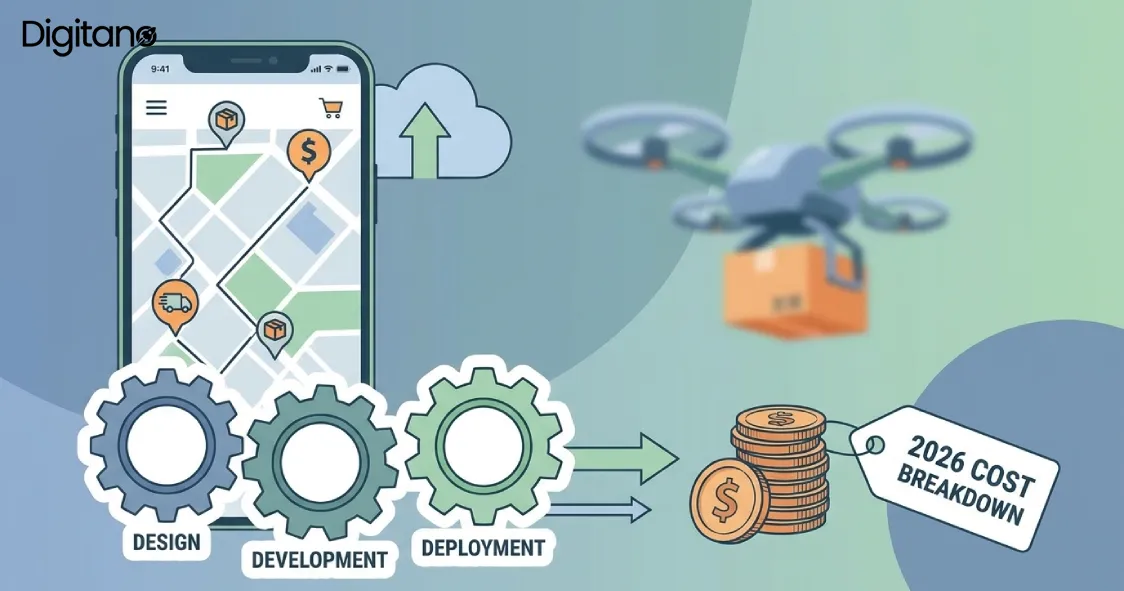
Think about the last time you ordered something online and watched the delivery driver move on a map in real time. That smooth experience is powered by an on-demand logistics app. Behind the scenes, these apps handle orders, match drivers, plan routes, track packages, and collect payments. In 2026, more businesses than ever want to build one of their own.
But the first question every founder and business owner asks is the same: how much will it cost? The honest answer is that it depends. The price can be as low as $30,000 for a simple app and can cross $300,000 for a large, custom enterprise platform. That is a huge gap, so this guide breaks it down step by step. You will see what you pay for, why the numbers change, real cost tables, money-saving tips, and answers to the most common questions.
The goal is simple. By the end of this article, you should be able to look at your own app idea and put a realistic number next to it.
Quick Answer: How Much Does a Logistics App Cost in 2026?
If you only need one number to start your planning, here it is. In 2026, on-demand logistics app development costs between $30,000 and $300,000 or more. Most businesses land somewhere in the middle.
• Basic app (MVP): $30,000 to $60,000. Covers order booking, driver assignment, basic tracking, and payments.
• Mid-level app: $60,000 to $150,000. Adds real-time GPS tracking, route optimization, fleet management, and admin dashboards.
• Enterprise app: $150,000 to $300,000+. Includes AI features, IoT sensors, ERP and warehouse integrations, multi-region support, and heavy security.
A mid-complexity custom logistics app in 2026 most often falls in the $40,000 to $90,000 range when built with an experienced offshore or nearshore team. The same project with a top US agency can easily cost two to three times more. We will look at why later in this article.
Why Everyone Is Building Logistics Apps in 2026
The demand is not hype. The numbers behind the logistics industry are massive and still growing fast.
• The on-demand logistics app market is expected to grow from around $23.3 billion in 2025 to $138.2 billion by 2035. That is nearly six times bigger in ten years.
• The global logistics market was valued at about $10.2 trillion in 2023 and is projected to almost double to $20.1 trillion by 2033, growing at a rate of 7.3% per year.
• The digital logistics market alone is projected to reach about $126 billion by 2030.
• The online food delivery market, one slice of on-demand logistics, is expected to hit $618 billion by 2030.
What do these numbers mean for you? Customers now expect to see where their package is, get accurate delivery times, and pay in the app. Businesses that still run on phone calls and spreadsheets are losing to competitors with apps. That is why companies of every size, from local courier startups to giant freight firms, are investing in logistics technology in 2026.
Cost by App Complexity
The single biggest cost driver is complexity. The more your app does, the more it costs to build, test, and maintain. Here is how the three common levels compare in 2026.
One more option worth knowing about is a white-label solution. This is a ready-made app that gets your branding on top. It can launch for as little as $15,000 to $25,000. It is fast and cheap, but you get little control over features, and you usually pay license fees forever. White-label works for testing an idea. Custom development works for building a real business.
Cost Breakdown by Development Stage
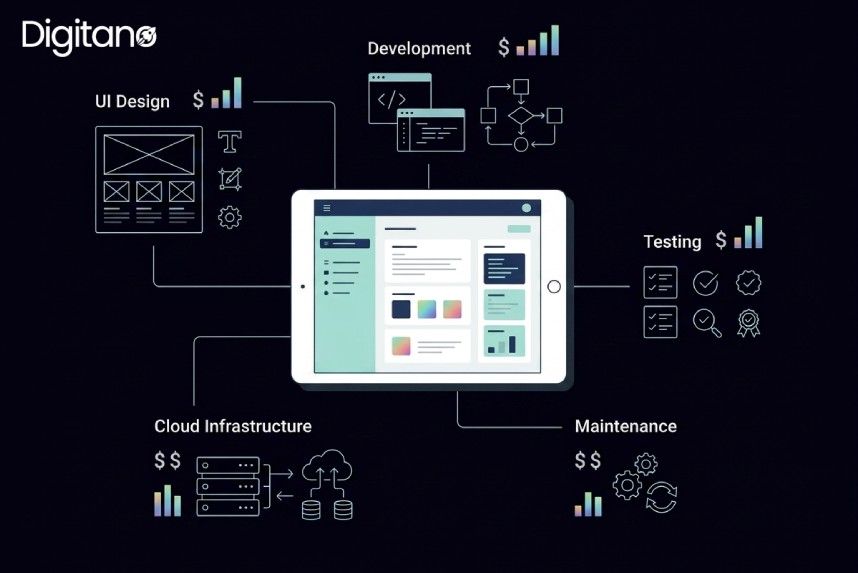
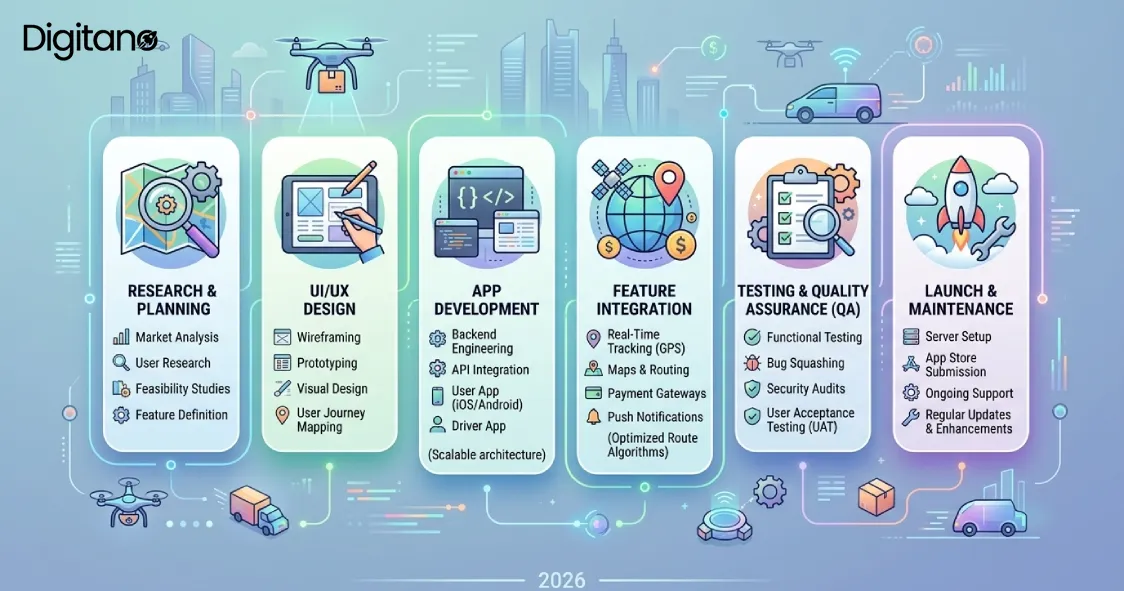
An app is not one big bill. It is a series of stages, and each stage takes a share of the budget. Knowing this split helps you understand quotes from agencies and spot anything strange. Here is a typical breakdown for a mid-level logistics app.
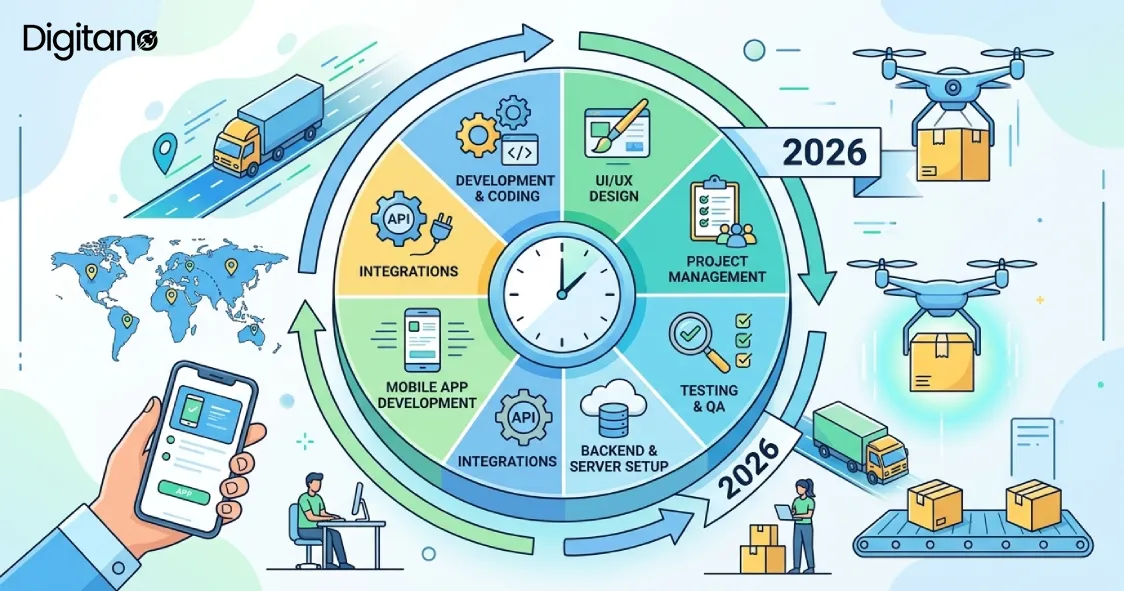
Development is always the biggest piece, usually 40 to 60 percent of the total. It covers the customer app, the driver app, the admin dashboard, and the backend that connects them all. The frontend takes around 8 to 16 weeks for a mid-level project, while the testing phase adds another 3 to 5 weeks. Testing matters more in logistics than in many other industries because the app handles payments, locations, and sensitive customer data. Cutting corners on QA is how apps crash during peak season.
Design deserves a special note for 2026. Good design is no longer just nice-looking screens. Trends like AI-driven personalization and polished dark mode require extra prototyping and user testing rounds. Professional design can take up to 20 percent of the total budget, but it is also where user retention starts. A confusing driver app means drivers quit. A confusing customer app means customers never order twice.
Cost by Developer Location
Where your team sits changes the price more than almost anything else. The same app, with the same features, can cost wildly different amounts depending on the region. Here are typical hourly rates in 2026.
A US developer charging $150 per hour and a South Asian developer charging $35 per hour can produce the same quality of work. The difference is the cost of living, not the cost of skill. This is why many startups in 2026 use a hybrid model: a local product manager who understands the market, plus an offshore development team that builds at a lower rate. Done well, this can cut the total bill by 40 to 60 percent without hurting quality.
Key Factors That Drive the Cost Up or Down
Two logistics apps can look similar on the surface and still have very different price tags. These are the factors that move the number.
• Number of apps: A logistics platform is rarely one app. You usually need a customer app, a driver app, and an admin web panel. That is three products in one project, and each adds cost.
• Platform choice: Building separate native apps for iOS and Android nearly doubles development work. Cross-platform frameworks like Flutter or React Native let one codebase run on both, saving 30 to 40 percent.
• Feature depth: Basic tracking is cheap. AI route optimization, demand prediction, and automated dispatching are expensive because they need specialized developers and more testing.
• Third-party integrations: Google Maps, Stripe, Twilio, and push notification services each need API work plus ongoing subscription fees. Simple integrations add 10 to 20 percent to the budget. Complex ones with ERP, CRM, or warehouse systems can add 30 to 50 percent or more.
• Backend and scalability: An app that serves 100 daily orders needs a very different backend than one serving 100,000. Building for scale costs more upfront but prevents painful rebuilds later.
• Security and compliance: Logistics apps handle payment data, location data, and personal information. Encryption, secure APIs, and compliance with rules like GDPR add real cost, but skipping them is far more expensive when something goes wrong.
• Team structure: A freelancer is cheapest but risky for a project this size. An in-house team gives control but costs salaries year-round. An agency sits in the middle and is the most common choice for logistics apps.
Feature-Wise Cost Breakdown
Features are where budgets are won and lost. Here is what the most common logistics app features cost to build individually in 2026.
A smart move here is to be ruthless about what goes in version one. Most startups overestimate what they need at launch. Real-time tracking and payments are must-haves. AI demand forecasting can wait until you have real users and real data.
The Hidden Costs Nobody Mentions in the Quote
The development quote is not the full story. Apps cost money after launch too, and this is where many first-time founders get surprised. Plan for these from day one.
• Maintenance: Expect 15 to 25 percent of the original development cost every year. A $100,000 app means $15,000 to $25,000 yearly for updates, bug fixes, and keeping up with new iOS and Android versions.
• Cloud hosting: Servers, databases, and storage on AWS, Google Cloud, or Azure typically run $500 to $5,000 per month depending on traffic.
• API subscription fees: Google Maps, SMS services, and payment processors charge per use. A busy app can spend $1,000 or more per month on map and messaging APIs alone.
• App store fees: Apple charges $99 per year and Google charges a one-time $25. Both take a cut of in-app payments.
• Marketing: An app nobody downloads earns nothing. Many businesses spend as much on launch marketing as they did on the MVP itself.
• Licensing and legal: Business registration, terms of service, privacy policies, and insurance vary by country but should not be ignored.
A good rule of thumb: whatever your development budget is, keep another 30 to 40 percent ready for the first year of running the app.
2026 Trends That Affect Your Budget
Technology in logistics moves fast, and 2026 has a few clear trends that change both what apps can do and what they cost.
• AI everywhere: AI-driven route optimization, delivery time prediction, and demand forecasting are becoming standard in mid-level apps. They raise upfront cost but cut fuel and labor costs every single day after launch.
• IoT tracking: Sensors on trucks and packages now report temperature, humidity, and location in real time. Critical for food and medicine delivery, and a meaningful add to the budget.
• Cross-platform as the default: Flutter and React Native have matured to the point where most new logistics apps choose them. Native-only builds are now mostly for apps with very heavy device-specific needs.
• AI-assisted development: Development teams now use AI coding tools to write and test code faster. This is slowly pushing project timelines down, which means more app for the same money compared to a few years ago.
• Offline-first design: Drivers lose signal in basements and rural roads. Apps in 2026 are expected to keep working offline and sync later, which adds engineering work but is now a baseline expectation.
Smart Ways to Reduce Development Cost
Saving money on an app does not mean building a worse app. It means spending where it matters and skipping what does not. Here are the strategies that work in 2026.
• Start with an MVP: Build only the core features first: booking, tracking, payments, and a basic admin panel. Launch, learn from real users, then add features that users actually ask for. This alone can cut the initial cost in half.
• Go cross-platform: One codebase for iOS and Android instead of two saves 30 to 40 percent on development and even more on long-term maintenance.
• Use pre-built integrations: Do not build your own maps, payments, or chat from scratch. Google Maps, Stripe, and Twilio exist exactly so you do not have to.
• Choose cloud infrastructure: Cloud hosting lets you start small and pay more only when traffic grows, instead of buying big servers on day one.
• Pick the right region: A skilled team in Eastern Europe or South Asia can deliver the same quality at a fraction of US rates. Check portfolios and references, not just rates.
• Write clear requirements: Vague requirements lead to rework, and rework is the most expensive part of any project. A well-run discovery phase pays for itself many times over.
How Long Does It Take to Build?
Time is money, literally, because most teams bill by the hour or the month. A realistic 2026 timeline looks like this: discovery and planning take 2 to 4 weeks, design takes 3 to 6 weeks, development takes 3 to 6 months depending on complexity, and testing plus launch takes 3 to 6 weeks. In total, expect 3 to 4 months for an MVP and 6 to 12 months for a full-featured platform. Be careful with anyone promising a complete custom logistics platform in a few weeks. Speed like that almost always means skipped testing or recycled code that will cost you later.
Frequently Asked Questions (FAQs)
Q1: How much does it cost to build an on-demand logistics app in 2026?
A: Most projects fall between $30,000 and $300,000. A basic MVP costs $30,000 to $60,000, a mid-level app costs $60,000 to $150,000, and a large enterprise platform can cross $300,000. The biggest factors are features, complexity, and where your development team is located.
Q2: How long does it take to develop a logistics app?
A: An MVP usually takes 3 to 4 months. A mid-level app takes 4 to 7 months, and an enterprise platform can take 7 to 12 months or longer. Clear requirements and an experienced team are the best ways to keep the timeline on track.
Q3: What features should my first version include?
A: Focus on the essentials: user registration, order booking, real-time GPS tracking, driver assignment, payments, push notifications, and a basic admin panel. Advanced features like AI routing and demand forecasting can be added later once you have real users.
Q4: How much does maintenance cost after launch?
A: Plan for 15 to 25 percent of the original development cost every year. For a $100,000 app, that means $15,000 to $25,000 annually for updates, bug fixes, server costs, and compatibility with new phone operating systems.
Q5: Is it cheaper to build a cross-platform app or two native apps?
A: Cross-platform is significantly cheaper. Frameworks like Flutter and React Native use one codebase for both iOS and Android, saving roughly 30 to 40 percent on development and reducing long-term maintenance costs. In 2026, cross-platform is the default choice for most logistics apps.
Q6: Should I choose a white-label app or custom development?
A: White-label apps launch fast and can cost as little as $15,000 to $25,000, but you get limited features, ongoing license fees, and little room to stand out. Custom development costs more upfront but gives you full ownership, flexibility, and the ability to scale. White-label suits quick market tests; custom suits serious long-term businesses.
Q7: Why do developer rates differ so much by region?
A: Rates reflect local living costs, not skill levels. North American developers charge $70 to $200 per hour, Eastern European teams charge $25 to $60, and South Asian teams charge $20 to $50. Many businesses combine a local product lead with an offshore build team to get quality at a lower total cost.
Q8: Is building a logistics app worth the investment in 2026?
A: For most logistics businesses, yes. The on-demand logistics app market is projected to grow from $23.3 billion in 2025 to $138.2 billion by 2035. A well-built app reduces manual work, cuts fuel costs through smarter routing, improves customer satisfaction with live tracking, and helps you handle peak demand without breaking. The return comes from efficiency gains that compound every single day.
Final Thoughts
So, what should you actually budget for an on-demand logistics app in 2026? For most businesses, the realistic answer is $40,000 to $90,000 for a solid, custom mid-level app built by an experienced team, with $30,000 to $60,000 enough for a focused MVP and $150,000+ reserved for enterprise-grade platforms.
The smartest path is almost always the same: start with an MVP, build cross-platform, use proven third-party services, and keep 30 to 40 percent of your budget aside for the first year of operations. The market is growing from $23.3 billion to a projected $138.2 billion over the next decade. The companies winning that growth are not the ones who spent the most. They are the ones who spent wisely, launched early, and improved based on what real users told them.