The Question Every Business Owner Asks
You have decided to start an online store — or maybe you are thinking about rebuilding the one you already have. You open your browser, search for the best ecommerce platform, and within about ten seconds you are staring at two names: Shopify and WordPress. Both are everywhere. Both have millions of users. Both have passionate fans who will swear up and down that their choice is the only right one.
So which one is actually better for your business?
The honest answer is that it depends but not in the vague, non-committal way you might expect. It depends on very specific things: how technical you are, what kind of store you want to build, how much control you need, and where you see your business going in three to five years. This guide breaks all of that down with real numbers, clear comparisons, and no fluff.
By the Numbers: How Big Are These Platforms?
Before getting into features, it helps to understand the scale of what we are talking about. These are not small players.
Shopify at a Glance 2026

30.2% ecommerce platform market share worldwide
Second only to WooCommerce, based on W3Techs’ April 2026 survey of ecommerce systems.
2.9 million+ live stores globally
StoreLeads reports 2,920,919 live Shopify stores as of April 10, 2026.
$11.56 billion annual revenue in 2025
Up 30% year over year, according to Shopify’s February 2026 earnings release.
$378.4 billion gross merchandise volume in 2025
Up from $292.3 billion in 2024, based on Shopify’s reported full-year GMV.
Gymshark, Nestlé, Tesla, and Red Bull
Shopify has publicly highlighted major brands using Shopify or Shopify Plus, including Gymshark, Nestlé, Tesla, and Red Bull.
WordPress + WooCommerce at a Glance
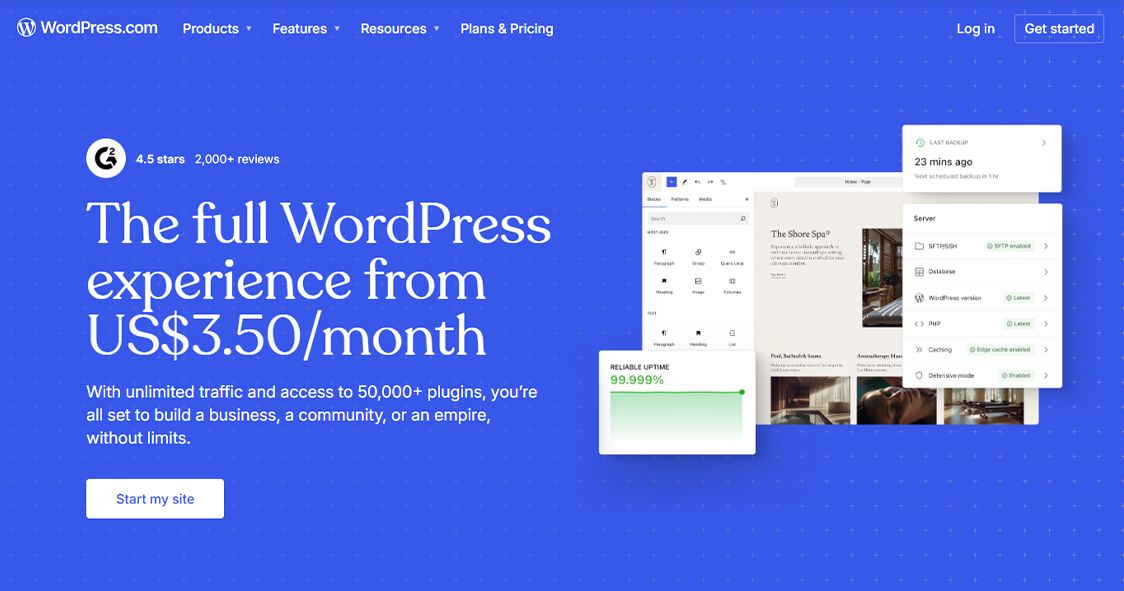
43%+ of ALL websites on the internet run on WordPress — over 518 million websites
62% CMS market share — no other CMS comes close
4.5–6.5 million active WooCommerce stores — depending on methodology
60,000+ plugins available — 13,000+ free themes
500+ new WordPress sites launched daily — continuously growing
Both platforms are dominant forces. Shopify wins in pure ecommerce transaction volume. WordPress wins in sheer scale of the overall web. Understanding that difference is actually the key to making the right decision for your business.
What Is Shopify, Really?
Shopify is a fully hosted, all-in-one ecommerce platform. When you sign up, Shopify handles everything: the servers, the security certificates, the payment processing infrastructure, and the software updates. You log in, add your products, choose a theme, and start selling. It was built from day one with one purpose in mind: making it as easy as possible for anyone to run an online store.
Founded in 2006 by Tobias Lutke after he was frustrated trying to sell snowboards online, Shopify was born out of a genuine problem. The existing tools were either too complicated or too limited. Lutke built something better — and clearly, a few million merchants agreed with him.
The platform sits on a subscription model. You pay a monthly fee, and in return you get a fully managed, secure, always-online store. The trade-off is that you are operating within Shopify's ecosystem. You can customize a great deal, but there are limits to what you can change under the hood.
What Is WordPress (with WooCommerce), Really?
WordPress started as a blogging platform in 2003. Over the next two decades, it evolved into something far bigger: the most widely used content management system on the planet. It powers everything from personal blogs and news sites to government portals and Fortune 500 company websites.
WordPress itself does not do ecommerce. That is where WooCommerce comes in. WooCommerce is a free, open-source plugin that transforms any WordPress site into a fully functional online store. Automattic, the company behind WordPress.com, acquired WooCommerce in 2015, and today it powers roughly a third of all ecommerce stores on the internet.
Unlike Shopify, WordPress + WooCommerce is self-hosted (usually). You install it on a web hosting account that you pay for separately, and you are responsible for keeping it updated, secure, and backed up. That is more work — but it also means you own everything and have total flexibility over what your store looks like and how it behaves.
Ease of Use: Where Shopify Wins Clearly
Let us be direct about this one: Shopify is easier. Not a little easier — significantly easier. If you have never built a website before, you can have a functional Shopify store live in under an hour. The interface is clean, the onboarding is guided, and the product management tools are intuitive even for complete beginners.
WordPress has a steeper learning curve. You need to understand the difference between themes and plugins, know how to manage hosting settings, handle your own SSL certificates, keep everything updated, and troubleshoot when things break. None of this is impossibly hard, but it requires time and a willingness to learn.
The reality check: If you are a solo entrepreneur who just wants to sell products and not think about technology, Shopify is almost certainly the better choice. If you are comfortable with technology or have a developer on your team, WordPress opens up far more possibilities.
The Real Cost of Each Platform
Pricing is where things get complicated, because both platforms have costs that are easy to overlook. Let us walk through what you actually pay.
Shopify Pricing (2025)
- Starter Plan: $5/month (very limited, no full storefront)
- Basic Plan: $39/month — suitable for new businesses
- Shopify Plan: $109/month — for growing businesses
- Advanced Plan: $399/month — for scaling operations
- Shopify Plus: from $2,300/month — enterprise level
On top of the monthly fee, Shopify charges transaction fees if you do not use Shopify Payments: 2% on Basic, 1% on Shopify plan, 0.5% on Advanced. Those percentages add up fast if you are doing serious volume.
WordPress + WooCommerce Pricing
- WordPress software: Free (open source)
- WooCommerce plugin: Free
- Web hosting: $10–$50/month (varies by provider and plan)
- Domain name: $9–$20/year
- Premium theme: $0–$200 one-time
- Essential plugins: $0–$200/year per plugin
- SSL certificate: Usually free with hosting
A basic WooCommerce store can run for around $300–$400 per year. A fully-featured store with premium plugins could exceed $1,000 annually. But crucially: WooCommerce charges zero transaction fees. Your only payment processing cost is the standard 2.9% + $0.30 per transaction from your payment processor, which is the same rate everyone pays regardless of platform.
Bottom line: For high-volume stores processing significant monthly sales, WordPress often ends up cheaper because there are no transaction fees eating into margins. For small stores just starting out, Shopify is simpler and the all-in pricing is predictable.
Head-to-Head Comparison at a Glance
Design and Customization
Shopify offers around 100+ professional themes, with free options available and premium themes ranging from $150 to $350. They look polished and are mobile-optimized by default. Customization within Shopify is done through their proprietary Liquid template language — powerful enough for most needs, but requires a developer for deep changes.
WordPress is in another league for design flexibility. With over 13,000 themes available in the official repository alone, and thousands more from premium marketplaces, you can create virtually any visual style. Page builders like Elementor, Divi, and the native Gutenberg editor give designers granular control without writing code. For complex custom builds, the entire codebase is accessible and modifiable.
Winner: WordPress, by a considerable margin — if customization matters to you.
SEO: Why WordPress Has a Historic Advantage
Search engine optimization is one area where WordPress has a well-documented and long-standing edge. The platform was built for content publishing, and that DNA shows in how well-structured WordPress sites tend to be for search engines.
Plugins like Yoast SEO (with over 700 million lifetime downloads) and Rank Math give WordPress users granular control over meta descriptions, schema markup, XML sitemaps, breadcrumbs, and canonical URLs. The blogging capabilities are best-in-class, and content marketing — still one of the highest-ROI long-term strategies for ecommerce — is simply easier and more powerful on WordPress.
Shopify has improved its SEO significantly over the years and handles the basics well. But it still has limitations: URL structures are partially fixed, some pages generate duplicate content by default, and technical SEO tweaks often require workarounds. For most small stores, these limitations are not dealbreakers. For businesses serious about organic search traffic, they matter.
Winner: WordPress for serious content-driven SEO strategies.
Performance and Security
This is where Shopify earns its subscription fee. Because Shopify controls the entire infrastructure, they can optimize it specifically for ecommerce workloads. Their servers are fast, their CDN (Content Delivery Network) is built-in, and their uptime is consistently excellent. Security patches are applied automatically, and PCI compliance (required for processing credit cards) is handled entirely by Shopify. You do not think about this stuff at all.
WordPress security is entirely your responsibility. A WordPress site is attacked on average every 22 minutes. The good news is that a well-maintained WordPress site is very secure. The bad news is that maintenance requires effort: keeping WordPress core, themes, and plugins updated, running security scans, setting up backups, and choosing a reputable hosting provider. According to security researchers, 92% of WordPress vulnerabilities come from outdated plugins — meaning most breaches are preventable.
Winner: Shopify for hands-off security and performance. WordPress is secure when properly managed, but requires active maintenance.
Who Should Choose Shopify?
Shopify is the right choice if most of these describe you:
- You want to get online fast without learning web development
- You are selling physical or digital products and that is your primary focus
- You value predictable monthly costs over maximum cost efficiency
- You want 24/7 customer support you can actually reach
- You are planning to scale quickly and need reliable infrastructure
- You sell in-person as well and want integrated point-of-sale tools
- You are dropshipping and need seamless app integrations
Major brands like Gymshark built their entire business on Shopify and scaled to hundreds of millions in revenue without ever leaving the platform. For pure-play ecommerce, it is a very strong foundation.
Who Should Choose WordPress?
WordPress + WooCommerce is the right choice if most of these describe you:
- Content marketing is central to your strategy (blog, editorial, tutorials)
- You need deep customization that goes beyond standard ecommerce
- You have developer resources or technical comfort
- You want to own your platform completely, with no vendor lock-in
- You are building more than just a store — a community, membership site, or media platform
- Long-term SEO and organic traffic are priorities
- Cost efficiency at scale matters — you process high volumes and transaction fees add up
Publications, content-driven brands, and businesses that blend ecommerce with editorial content consistently find WordPress more capable for their specific needs.
Frequently Asked Questions
Q: Can I switch from Shopify to WordPress (or vice versa) later?
A: Yes, but it is not trivial. Product data, customer information, and order history can usually be migrated with tools or developer help. However, your theme, URLs, and integrations will need to be rebuilt. It is easier to make the right choice upfront than to migrate later, especially once your store has significant history.
Q: Is WordPress free? What will I actually end up paying?
A: WordPress software is free and open-source. Your real costs are hosting ($10–$50/month), a domain ($10–$20/year), and any premium themes or plugins you need. A functional store can be built for under $500/year. A feature-rich store with premium tools might run $1,000–$2,000/year still typically less than comparable Shopify plans at scale.
Q: Does Shopify own my store data?
A: Shopify hosts your store and gives you access to your data, but you are operating on their platform under their terms. If Shopify changes its pricing, policies, or discontinues a feature, you are subject to those changes. With WordPress, you own and control all your data entirely. This is a real consideration for long-term business strategy.
Q: Which platform is better for SEO?
A: WordPress has a stronger track record for SEO, particularly for content-heavy strategies. The flexibility of plugins like Yoast SEO, combined with WordPress's blogging heritage, makes it easier to build and execute a comprehensive SEO strategy. Shopify is solid for basic SEO and has improved greatly, but has some technical limitations that can matter for competitive organic search.
Q: How many apps/plugins does each platform have?
A: Shopify has over 13,000 apps in its App Store. WordPress has over 60,000 plugins in its official repository alone, with thousands more available from third-party marketplaces. WordPress wins on sheer volume and variety, though quality and compatibility vary more widely than on Shopify's curated marketplace.
Q: Is Shopify good for large businesses?
A: Absolutely. Shopify Plus, starting at $2,300/month, powers enterprise brands including Gymshark, Red Bull, Nestle, and LVMH. It offers dedicated account managers, custom checkout, and enterprise-grade infrastructure. Over 76,600 stores use Shopify Plus with 300+ new merchants joining each week.
Q: Which platform is more secure?
A: Shopify handles security entirely SSL, PCI compliance, and patches are automatic. WordPress is secure when properly maintained, but requires active effort: regular updates, security plugins, strong hosting, and backups. For non-technical users, Shopify removes a significant security burden. For teams with technical resources, a well-managed WordPress site is equally secure.
Q: Can I use both? Is there a hybrid approach?
A: Yes some businesses run their main website and blog on WordPress and embed a Shopify Buy Button for ecommerce. This gives you WordPress's content strengths with Shopify's reliable checkout. It is a valid approach for content-first brands that also sell products, though it adds some complexity in managing two systems.
Final Verdict: There Is No Universal Winner
After going through all of this, the answer might feel anticlimactic: both platforms are genuinely good. Both power millions of successful businesses. Both will continue to improve.
What matters is matching the platform to your specific situation. If you are a first-time founder who wants to focus on marketing and products rather than technology, Shopify removes friction and lets you move fast. If you are building a content-driven brand, have technical resources, or want full ownership and flexibility, WordPress is the more powerful and cost-efficient long-term choice.
Here is the simplest decision framework: if you can describe your business purely as an online store — products, checkout, shipping — start with Shopify. If your business involves content, community, membership, or anything that goes beyond a standard product catalog, start with WordPress.
Either way, the platform is not what makes your business succeed. Your products, your marketing, your customer service, and your relentless effort to understand and serve your audience — those are what matter. Pick the platform that gets out of your way and lets you focus on those things, and you will be just fine.