How ContentMe CMS Powers contentmecoupons.com,
thestyleversa.com & theshopbuzz.com. From One Dashboard
Managing one affiliate website is a job. Managing three, five, or ten is a completely different challenge and most content management systems were simply never designed for it.
If you have ever had to log into five separate WordPress dashboards just to update a coupon code, track down a broken affiliate link across dozens of blog posts on different sites, or figure out why one of your sites dropped in traffic when you were too busy maintaining the others, you already know what the problem is. The platform was not built for the way you actually work.
This is exactly the problem that ContentMe CMS was built to solve.
In this guide, we are going to look at what makes an affiliate CMS truly great for multi-site management in 2025 and 2026. We will dig into the real features that matter, look at how ContentMe CMS powers three live affiliate websites: contentmecoupons.com, thestyleversa.com, and theshopbuzz.com from a single unified admin dashboard, and give you an honest comparison with the alternatives on the market.
Whether you are building your second affiliate site or managing a portfolio of ten, by the end of this guide you will know exactly what to look for and whether a purpose-built affiliate CMS is the right move for your operation.
1. The Affiliate Publishing Market in 2025 and 2026
Before we get into platforms and features, let's ground this in the real numbers, because the scale of the affiliate marketing industry in 2025 and 2026 is exactly why getting your infrastructure right matters so much.
The affiliate publishing space is no longer a side hustle for most serious operators. It is a business. And like any business that grows, it hits infrastructure limits. The publisher who has one WordPress site can manage it manually. The publisher with five sites who is still doing everything manually is losing money every single day to broken links, expired coupons, slow update cycles, and the pure cognitive overhead of managing disconnected systems.
The shift that happened through 2024 and 2025 is that affiliate publishers at every level started treating their CMS not as a writing tool, but as a business operations platform. The ones who made that shift and chose the right platform for it are the ones growing in 2026.
2. Why Generic CMS Platforms Were Not Built for Affiliate Publishers
Let's be honest about the platforms most affiliate publishers start with. WordPress is extraordinary software. It powers 43% of all websites on the internet and has an ecosystem of thousands of plugins for almost any purpose. But here is what WordPress was designed to be: a blogging and content management platform. It was not designed to be an affiliate site operations platform.
What does that mean in practice? It means that to get WordPress to do what a serious affiliate publisher needs, you end up stacking plugins. You need a coupon management plugin. A link management plugin. An affiliate link cloaking plugin. A multi-site management plugin. An SEO plugin. A redirect management plugin. A product display plugin. An author management plugin. A schema markup plugin.
Each of these plugins costs money. Each one adds complexity. Each one is built by a different team with different update cycles. Each one adds weight to your page load time. And when something breaks because eventually something always breaks, you have to diagnose which of your fifteen plugins is conflicting with which other plugin.
For a single site with moderate traffic, this is manageable. For a publisher running three, five, or ten affiliate sites simultaneously, this stack becomes a serious operational liability.
3. Meet ContentMe CMS: Built for Affiliate Publishers, Not Adapted for Them
ContentMe CMS is a purpose-built content management system designed specifically for affiliate publishers who manage multiple websites. Unlike WordPress, which requires you to bolt on affiliate-specific functionality through plugins, ContentMe CMS has all of it built in from the ground up as core features.
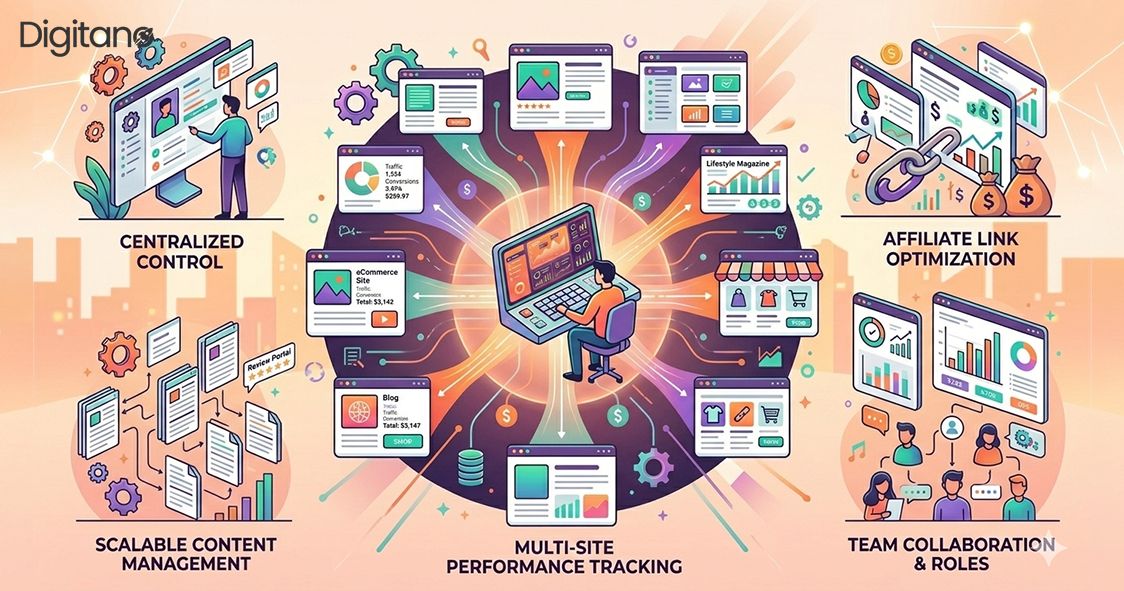
The result is a unified admin dashboard where you can manage blogs, coupons, brands, authors, products, events, pages, redirections, and SEO across multiple sites from a single login. No plugin stack. No compatibility issues. No separate billing for each tool. One platform, one workflow, all your sites.
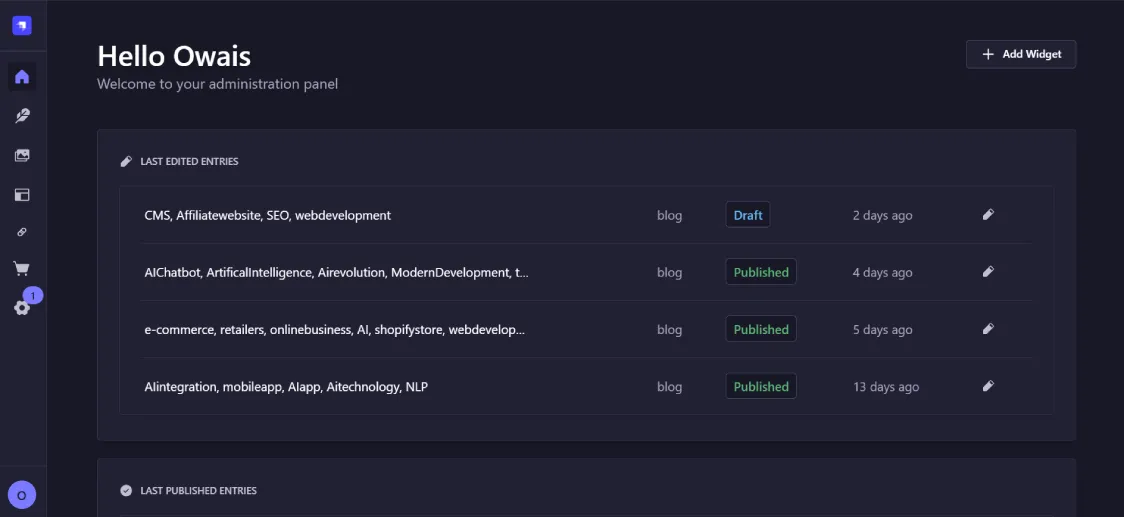
From the admin panel, the site switcher in the top bar lets you jump between sites instantly. The blog library shows you every post across every site with status indicators (Draft or Published), timestamps, and quick-action buttons to view, edit, or delete. The left sidebar gives you instant access to every content type and management section without hunting through plugin menus.
Let's look at the three live sites currently powered by ContentMe CMS and what running them from a single dashboard actually looks like in practice.
4. Three Real Affiliate Sites, One CMS Dashboard
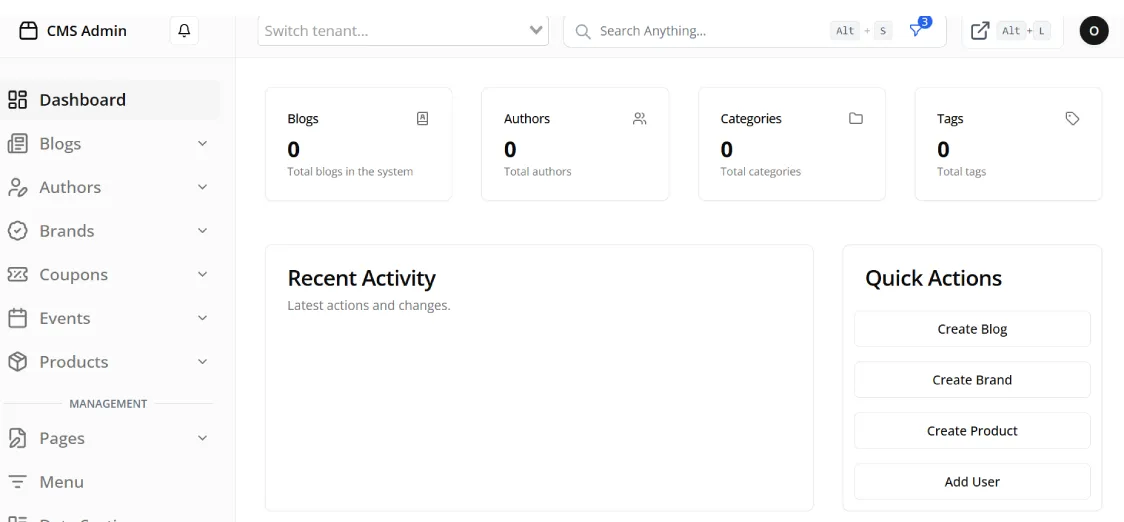
This is the part that makes ContentMe CMS different from most alternatives, it is not theoretical. It is running live affiliate websites right now. Here is what each site does and how the CMS powers it.

5. ContentMe CMS Module Breakdown: What Each Section Does
Let's walk through every module visible in the ContentMe CMS admin sidebar and explain exactly what it does for an affiliate publisher and why it matters.
6. ContentMe CMS vs. The Alternatives: Full Comparison
How does ContentMe CMS stack up against the most common alternatives? Here is an honest, feature-by-feature comparison. The green highlights show where ContentMe CMS has native built-in functionality that competing platforms require plugins, apps, or workarounds to replicate.
The story the table tells is clear. ContentMe CMS is the only platform in this comparison that handles coupons, brands, authors, products, events, meta pages, redirections, data sections, and multi-site switching as native built-in features without a single additional plugin. WordPress can do all of these things, but requires you to find, install, configure, update, and pay for a separate plugin for each one. Lasso handles link management and product boxes well but is not a full CMS; it sits on top of WordPress. Shopify handles e-commerce but is not designed for content-first affiliate publishing at all.
7. What Changed for Affiliate Publishers in 2025 and 2026
Google's Algorithm Updates Hit Thin Coupon Sites Hard in 2024-2025
One of the biggest challenges for coupon and deals affiliate sites through 2024 and into 2025 was a series of Google algorithm updates specifically targeting low-quality coupon content pages with expired codes, outdated deals, and no genuine editorial value. Sites that survived and grew were the ones publishing real editorial content alongside their coupon listings: genuine product reviews, honest comparisons, and curated recommendations with real author credentials. ContentMe CMS's combination of a full Blog module (for editorial content), a Coupons module (for deals), an Authors module (for EEAT signals), and a Brands module (for structured merchant information) is exactly the architecture that lets a coupon site build genuine editorial credibility, not just a list of codes.
EEAT Signals Became a Decisive Factor in 2025
Google's EEAT framework Experience, Expertise, Authoritativeness, Trustworthiness became increasingly decisive as a ranking factor through 2024 and 2025. The algorithm updates that hit many affiliate sites hardest were specifically targeting pages that showed no evidence of genuine human expertise or experience. ContentMe CMS's native Authors module is a direct response to this: it allows publishers to create rich author profiles with credentials, expertise areas, and publication history and associate those profiles with every piece of content they produce. This is not just a nice-to-have. For affiliate sites in health, finance, and other YMYL (Your Money or Your Life) categories in particular, it is an SEO necessity in 2026.
Site Speed Became a Competitive Advantage in 2025
Core Web Vitals, Google's set of page experience metrics measuring loading speed, interactivity, and visual stability became a more pronounced ranking signal through 2024 and 2025. Affiliate sites on bloated WordPress setups with 25+ plugins, unoptimised images, and shared hosting saw measurable ranking impacts. Purpose-built CMSs like ContentMe, built from the ground up with performance in mind rather than retrofitted with speed optimisation plugins, carry a natural advantage here. There is no plugin overhead, no compatibility-related performance drag, and no third-party scripts that have not been specifically optimised for the platform.
In 2026, Events-Driven Affiliate Marketing Is Booming
One of the most significant revenue opportunities for affiliate publishers in 2025 and 2026 is time-sensitive, event-driven content Black Friday, Prime Day, Cyber Monday, brand-specific sale events, seasonal promotions. ContentMe CMS's Events module is built specifically for this use case: it lets publishers plan, schedule, and manage promotional events as structured content objects, not just manually edited blog posts that get stale and forgotten. For a coupon site like contentmecoupons.com, or a shopping discovery site like theshopbuzz.com, the ability to manage a Black Friday event as a proper content type with start dates, end dates, associated brands, and linked products is a genuine competitive advantage over sites managing the same content in ad hoc WordPress posts.
8. Who Is ContentMe CMS Built For?
ContentMe CMS is not the right tool for every publisher. Here is an honest breakdown of who it serves best, and where alternative platforms might be a better fit.
ContentMe CMS is the right choice if:
- You manage two or more affiliate websites and want to operate them from a single admin dashboard
- You run a coupon, deals, or cashback site where coupon freshness and brand management are core operational needs
- You publish content across multiple niches (fashion, home, tech, pets) and want a consistent content workflow across all of them
- You want author management, brand management, product management, and blog management integrated natively without a plugin stack
- You value a clean, unified editorial workflow over the maximum flexibility of a plugin ecosystem
- You are building a team of content writers and want them all working in the same system regardless of which site they are contributing to
You might prefer WordPress if:
- You run a single, highly specialised affiliate site that needs very specific third-party integrations
- You have a developer on the team who actively maintains a custom WordPress setup
- You need WooCommerce specifically for e-commerce functionality alongside your affiliate content
- Your budget for platform investment is near zero and you are managing a single site on shared hosting
9. Frequently Asked Questions About ContentMe CMS
Q1: How is ContentMe CMS different from WordPress for affiliate sites?
A: The core difference is architecture. WordPress is a general-purpose CMS that you extend with plugins to get affiliate-specific functionality. ContentMe CMS is built specifically for affiliate publishing coupon management, brand management, product management, author management, events, and redirections are all native features, not plugins. For a publisher managing multiple sites, this means one unified admin dashboard instead of separate WordPress installs, one consistent workflow instead of different plugin setups per site, and no plugin compatibility issues or stacking costs. The operational time savings are significant, typically 8 to 11 hours per week for publishers managing three or more sites.
Q2: Can I manage contentmecoupons.com, thestyleversa.com, and theshopbuzz.com from the same login?
A: Yes, this is one of ContentMe CMS's core capabilities. The site switcher in the admin top bar lets you jump between all your sites from a single login. When you switch sites, the content changes but the interface, workflow, and modules remain identical. This means your team learns one system and uses it across every property. Blog posts, coupons, brands, products, authors, and events are all managed site-specifically but through the same dashboard. No separate logins, no separate admin URLs, no wasted time switching between systems.
Q3: How does ContentMe CMS handle coupon management compared to WordPress coupon plugins?
A: ContentMe CMS has a native Coupons module with a full library, add/edit functionality, and a Sorting/Merging feature, visible in the admin sidebar. This is purpose-built for coupon affiliate publishers, unlike WordPress coupon plugins which are typically adapted from generic promo code tools. The Brands module associates coupons directly with brand profiles, so every coupon is linked to its merchant, category, and associated content automatically. The practical difference: when a brand runs a new promotion or a coupon code expires, you update it in one place and it reflects across all associated content, rather than hunting through individual posts across multiple sites.
Q4: What does the Blog Library in ContentMe CMS show me?
A: The Blog Library gives you a unified view of all posts on the currently selected site, with columns for ID number, title, last-updated timestamp, status (Draft or Published with colour-coded badges), and quick action buttons to view, edit, or delete each post. You can search by title or status, filter results, and paginate through your full content archive. In the admin screenshot, 14 blog posts are visible across two pages, with 2 in Draft status and 12 Published. This at-a-glance content pipeline visibility, knowing exactly what is live and what is pending across all your content is something WordPress requires a separate editorial management plugin to replicate.
Q5: Does ContentMe CMS help with Google's EEAT requirements?
A: Yes, directly. ContentMe CMS's native Authors module lets you create rich author profiles with credentials, expertise descriptions, and publication history and associate those profiles with every piece of content they produce. This generates proper author schema markup and creates the kind of transparent authorship signals that Google's EEAT (Experience, Expertise, Authoritativeness, Trustworthiness) framework looks for. For affiliate sites in competitive niches where author expertise is a ranking factor, managing this natively in the CMS, rather than as an afterthought via a plugin gives you a structural advantage. Every post on every site can carry proper author attribution without any extra manual steps.
Q6: How does the Redirections module help affiliate publishers?
A: Broken links are a silent revenue killer for affiliate sites. When an affiliate programme changes its URL structure, when a product page moves, or when you restructure your site's content, internal links break and affiliate tracking links fail, often without any obvious error that you would notice immediately. ContentMe CMS's native Redirections module lets you manage all URL redirects for each site from the admin no plugin needed. When you identify a broken link, you add a redirect in seconds. For publishers managing three or more sites, having redirect management in the same dashboard as content management, rather than in a separate plugin that may or may not be up to date makes link hygiene a routine part of content operations rather than a periodic cleanup task.
Q7: What types of affiliate sites are the best fit for ContentMe CMS?
A: ContentMe CMS is particularly well-suited to three types of affiliate site. First, coupon and deals sites (like contentmecoupons.com) where the Coupons module, Brands module, and Events module provide native infrastructure for the core content types. Second, product review and discovery sites (like theshopbuzz.com) where the Products module, Blog module, and Data Sections enable structured, affiliate-linked product content at scale. Third, lifestyle and fashion affiliate sites (like thestyleversa.com) where the combination of editorial blog content, author management, and brand associations delivers the editorial credibility and EEAT signals needed to rank competitively. Any affiliate publisher managing two or more sites in any of these categories will find ContentMe CMS significantly more efficient than a multi-WordPress setup.
Final Thoughts: The Right CMS Is the One Built for Your Business Model
Here is the honest truth about CMS choices for affiliate publishers in 2025 and 2026. There is no universally right answer. WordPress is extraordinary software and will remain the right choice for many publishers, particularly those with a single site or a developer on the team who actively maintains a custom setup.
But for the publisher managing three affiliate sites, a coupon site, a fashion site, and a shopping discovery site with a lean team that needs to move fast, publish consistently, keep coupons fresh, manage brands and authors and products across all three properties, and do all of this from a single operational hub, the case for a purpose-built platform is very strong.
ContentMe CMS is doing this right now, in production, across contentmecoupons.com, thestyleversa.com, and theshopbuzz.com. The admin dashboard in the screenshot is not a demo. It is a live content operation with 14 blog posts actively managed, coupon codes live on the site, brand profiles associated with products, and author credentials powering EEAT signals all from one login, all in one interface.
That is what purpose-built affiliate infrastructure looks like in 2026. And for publishers who want to spend less time managing systems and more time growing their income, it is worth taking seriously.